Details
- Size: 98,155 square feet
- Completion Date: 2025
Team
- Architect: HOK, Inc.
- Contractor: Turner Construction Company
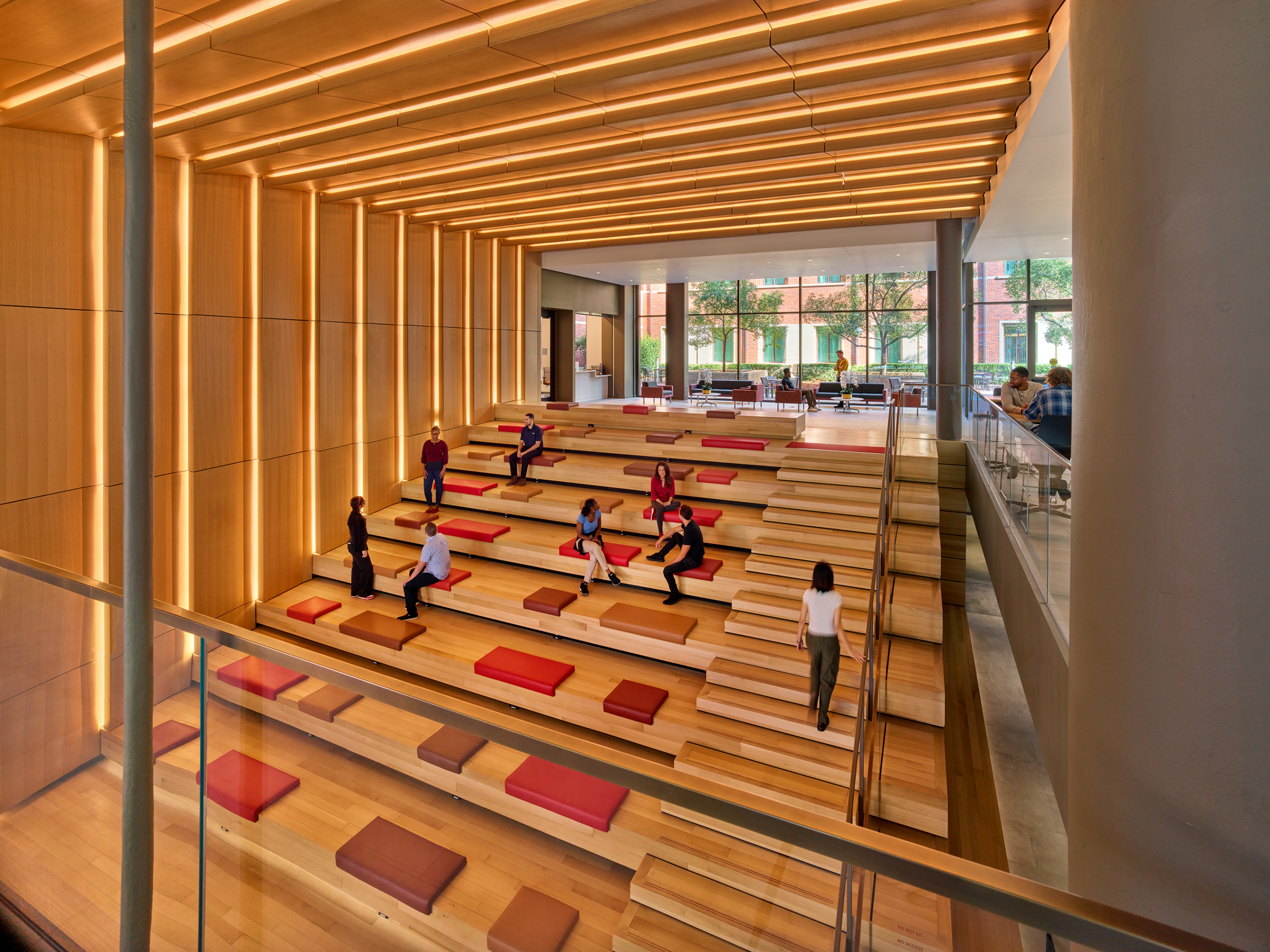
The 98,155 SF USC Ginsburg Hall of Computer Science includes flexible research laboratory space, a 300-seat lecture hall, classrooms, state-of-the-art computer science instructional laboratories, drone-flying lab, and study spaces for computer science students. In addition, the building includes discussion areas, conference rooms, office space for computer science student organizations, and lounges to encourage interaction and collaboration.
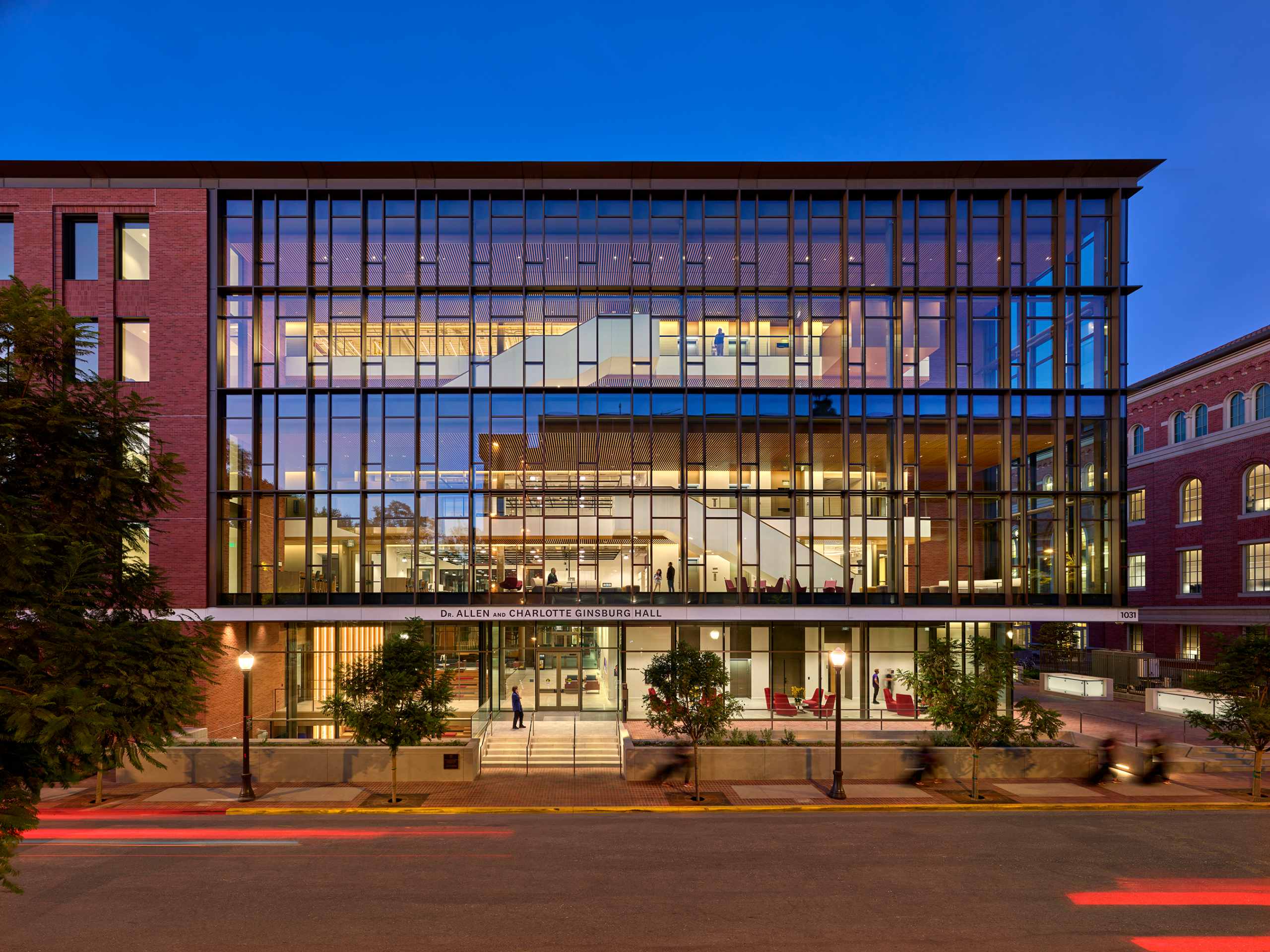
Open layouts and glass walls promote transparency and visual connections between laboratories, offices, and public spaces.
Photography: © Alan Karchmer/OTTO
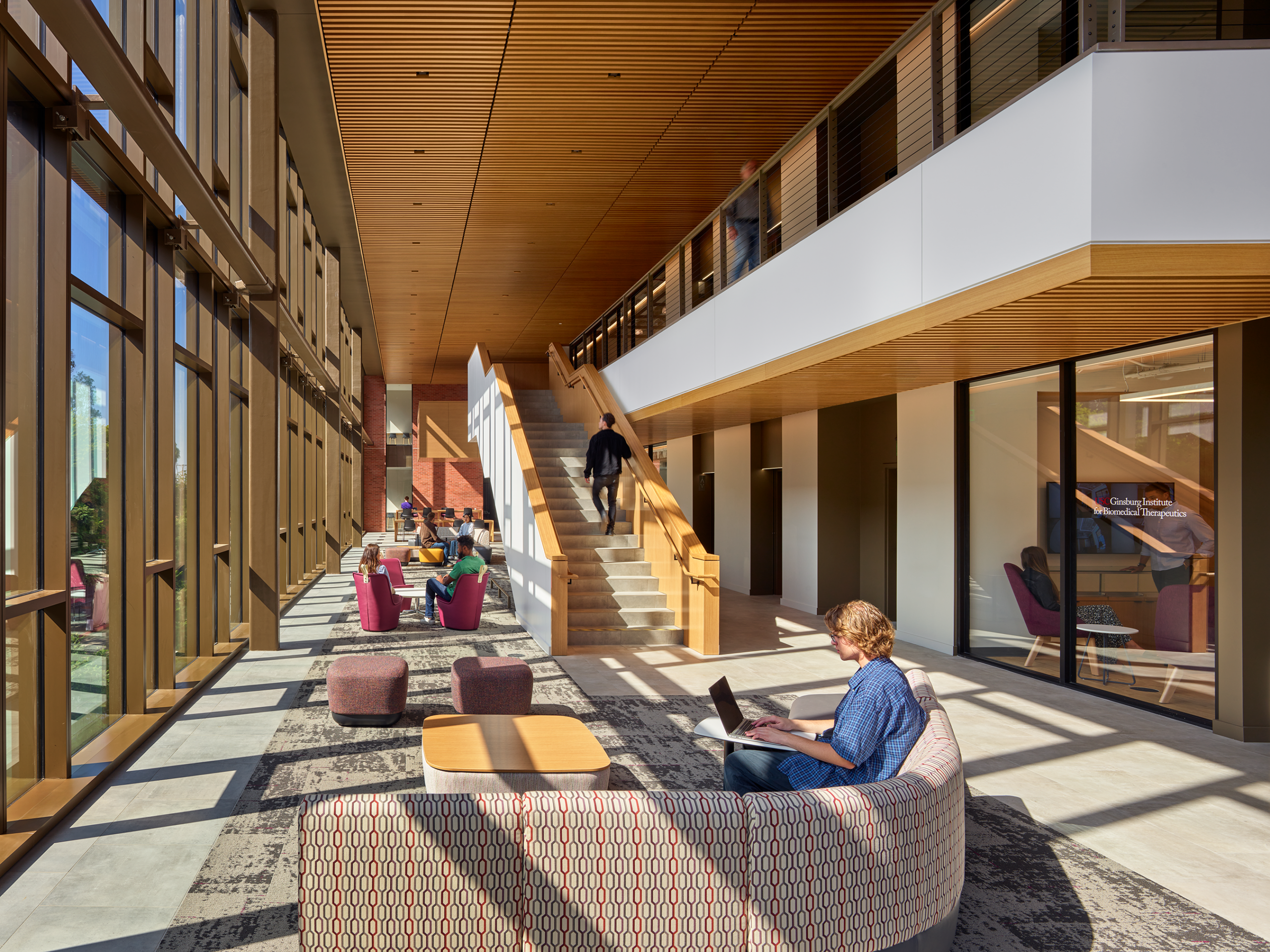
Innovative structural solutions made the multi-story floating atrium and open, column-free lobby spaces possible, while long-span steel framing enabled the transparent glass lobby and skylight. The structure was carefully integrated with building systems, including radiant inslab heating and cooling, and designed to perform safely during seismic events.
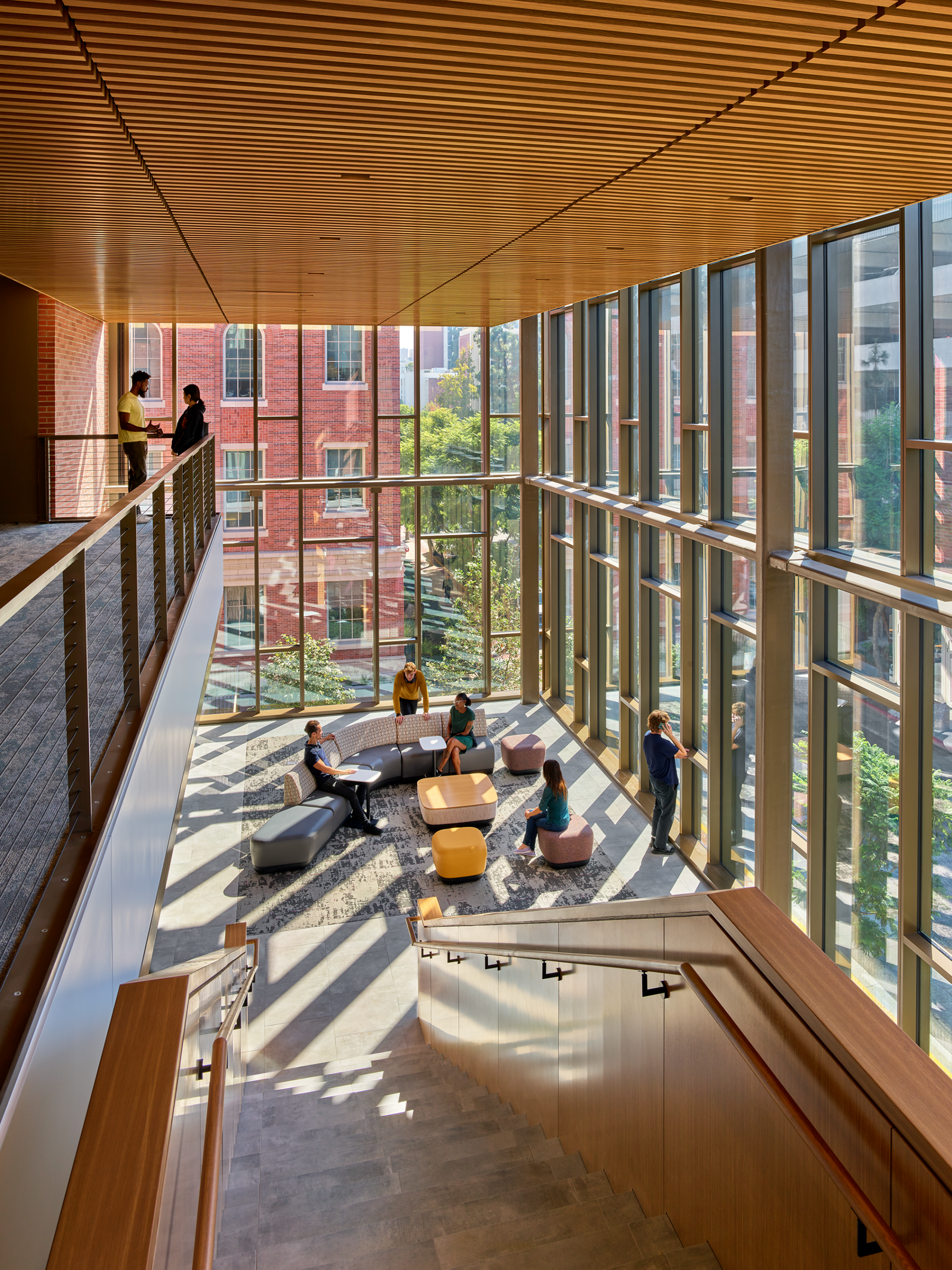
This project set a new sustainability benchmark at USC as its first LEED Platinum–certified building and a catalyst toward zero-emissions goals. A ‘Digital Twin’ of the building showcases real-time monitoring and analysis of the building’s energy consumption and water usage, among other data points.
HOK, Inc., Turner Construction, and the entire design team worked closely with the University of Southern California (USC) to deliver the design and construction of this new teaching and research facility for USC’s Viterbi School of Engineering. Located south of Ray R. Irani Hall (RRI) and west of the Michelson Center for Convergent Bioscience (MCB), both engineered by John A. Martin & Associates, Inc., the project serves faculty, technical staff, postdoctoral researchers, students (graduate and undergraduate) and administrative staff.
Ginsburg Hall is a cutting-edge hub advancing research in futurism, including artificial intelligence, robotics, and advanced computing. The building’s design reflects Viterbi’s culture of connection and collaboration, with open layouts and glass walls that promote transparency and visual connections between laboratories, offices, and public spaces. The structural system by John A. Martin & Associates, Inc. was integral to realizing this vision, enabling expansive, column-free interiors and long-span framing that support flexible research environments.
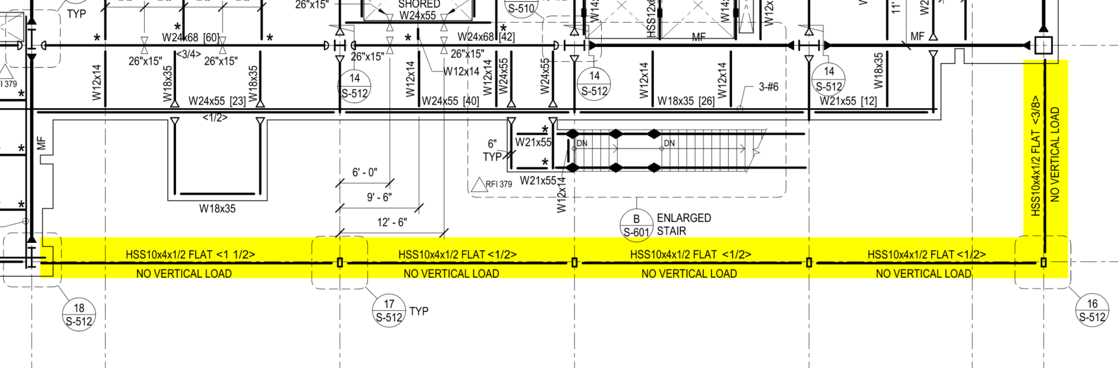
Design details of exterior enclosure with lobby stairs and box column detail
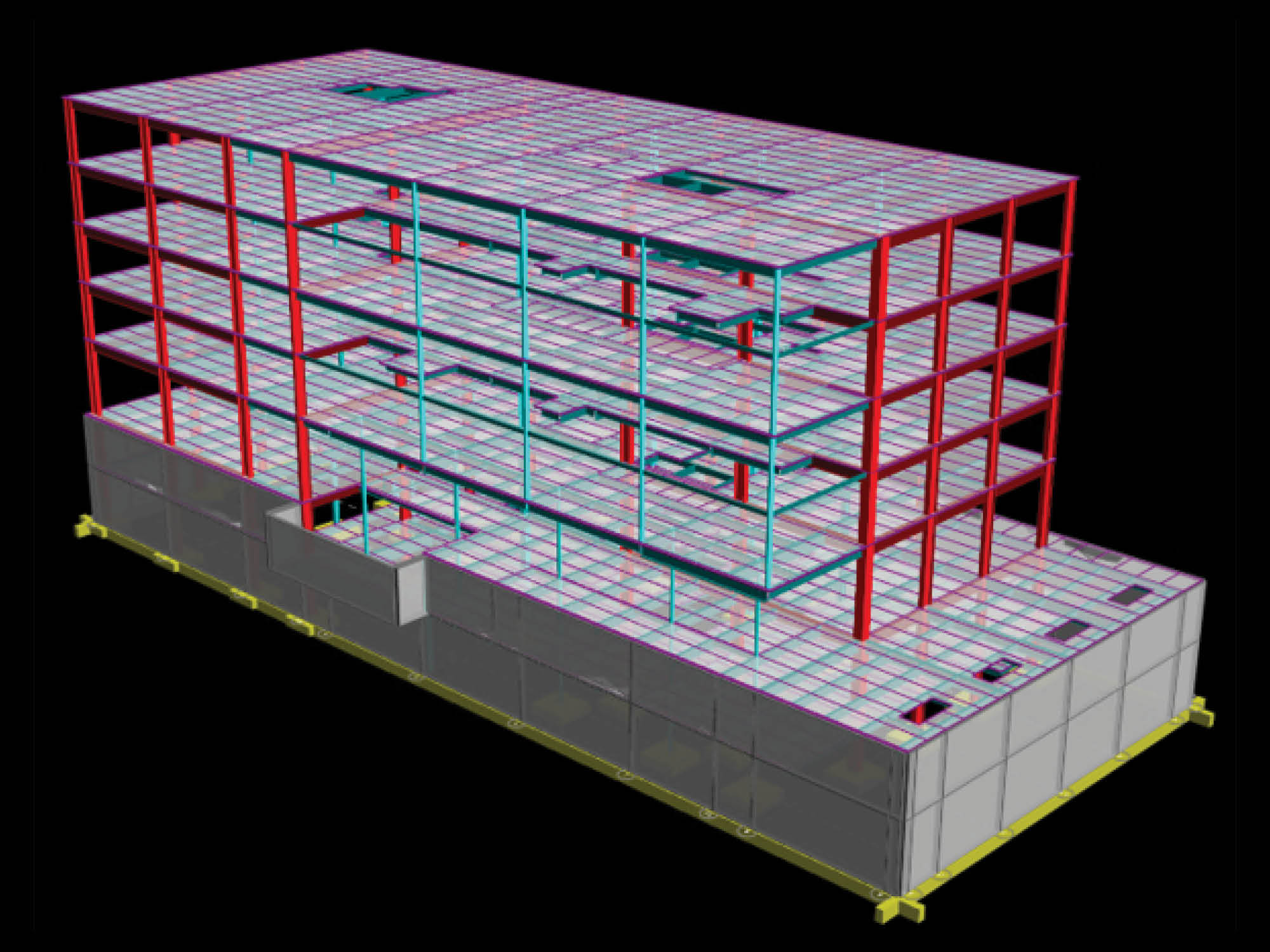
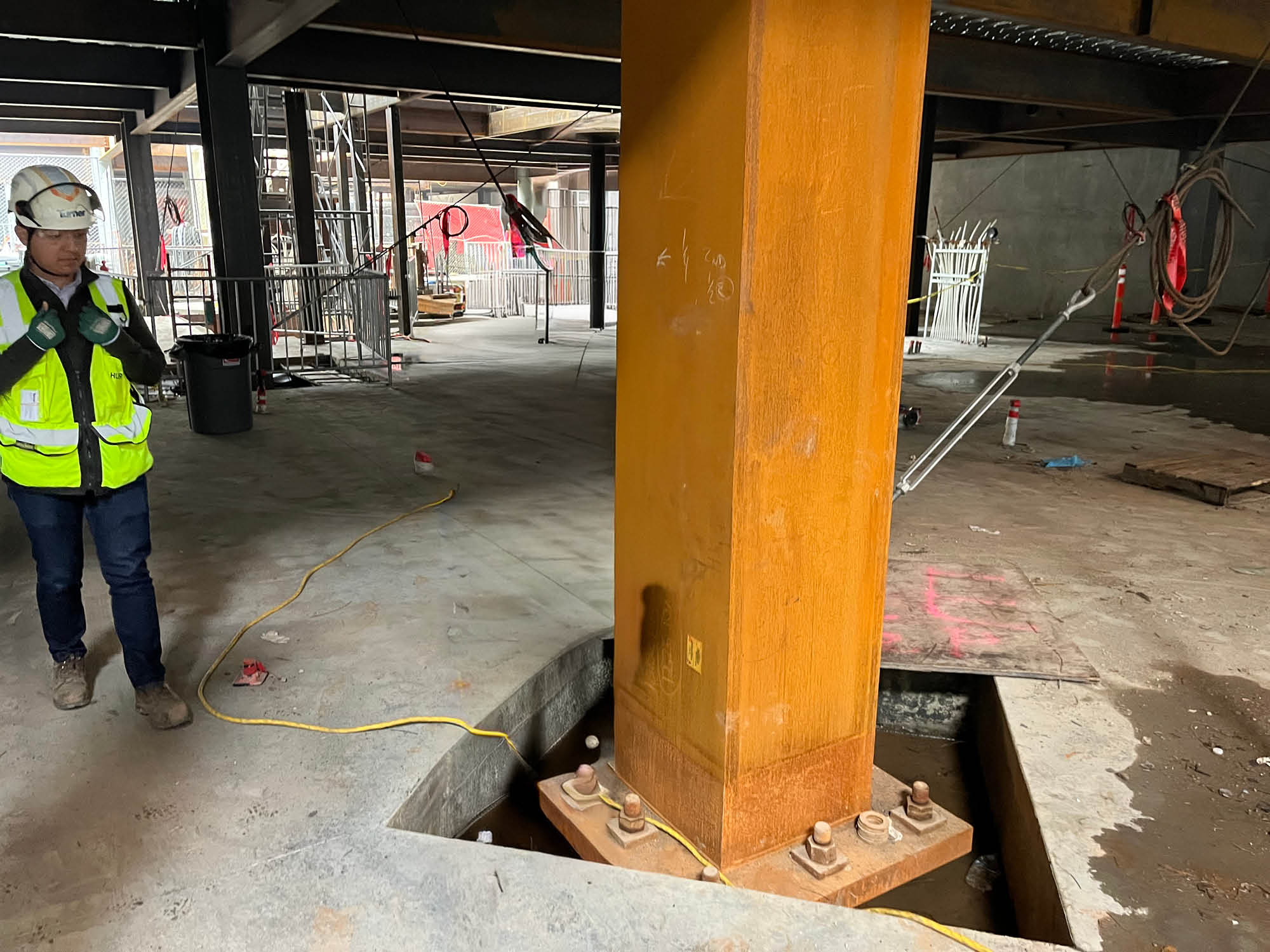
(Left) Model of our structural system; (Right) Construction image of box column
One significant challenge was designing cantilevered transfer girders to support the building’s multi-story floating atrium, requiring careful deflection control across multiple interconnected beams and floors. A custom built-up box column was developed to support the load shared by two special steel moment frames. Non-stacking program layouts required 44-inch deep transfer beams and column-free lobby spaces, demanding creative load transfer solutions.
The structural system integrated with project sustainability goals. The project was certified LEED Platinum, a first for USC and a designation achieved by only 10-11% of LEED certified projects.
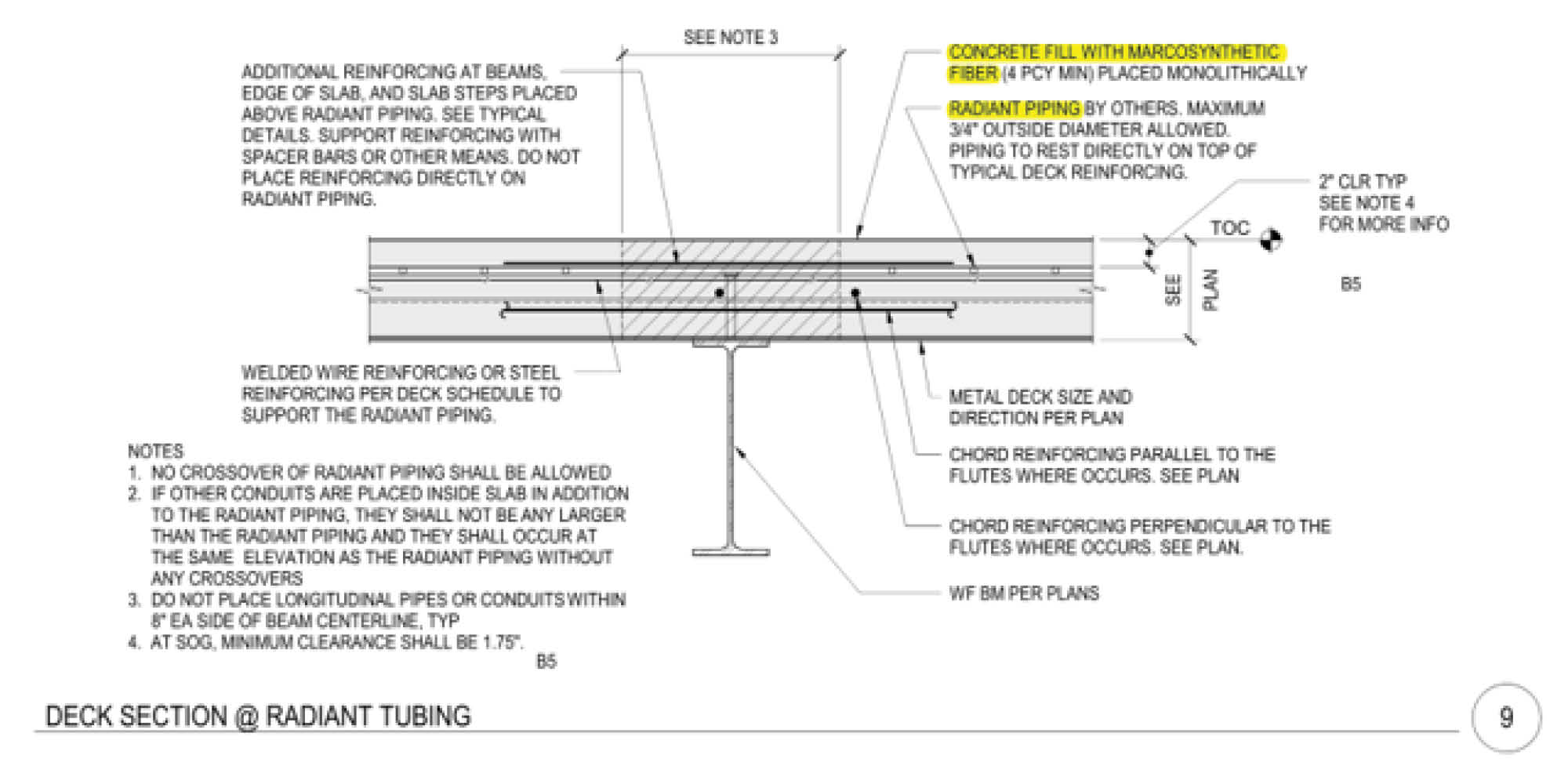
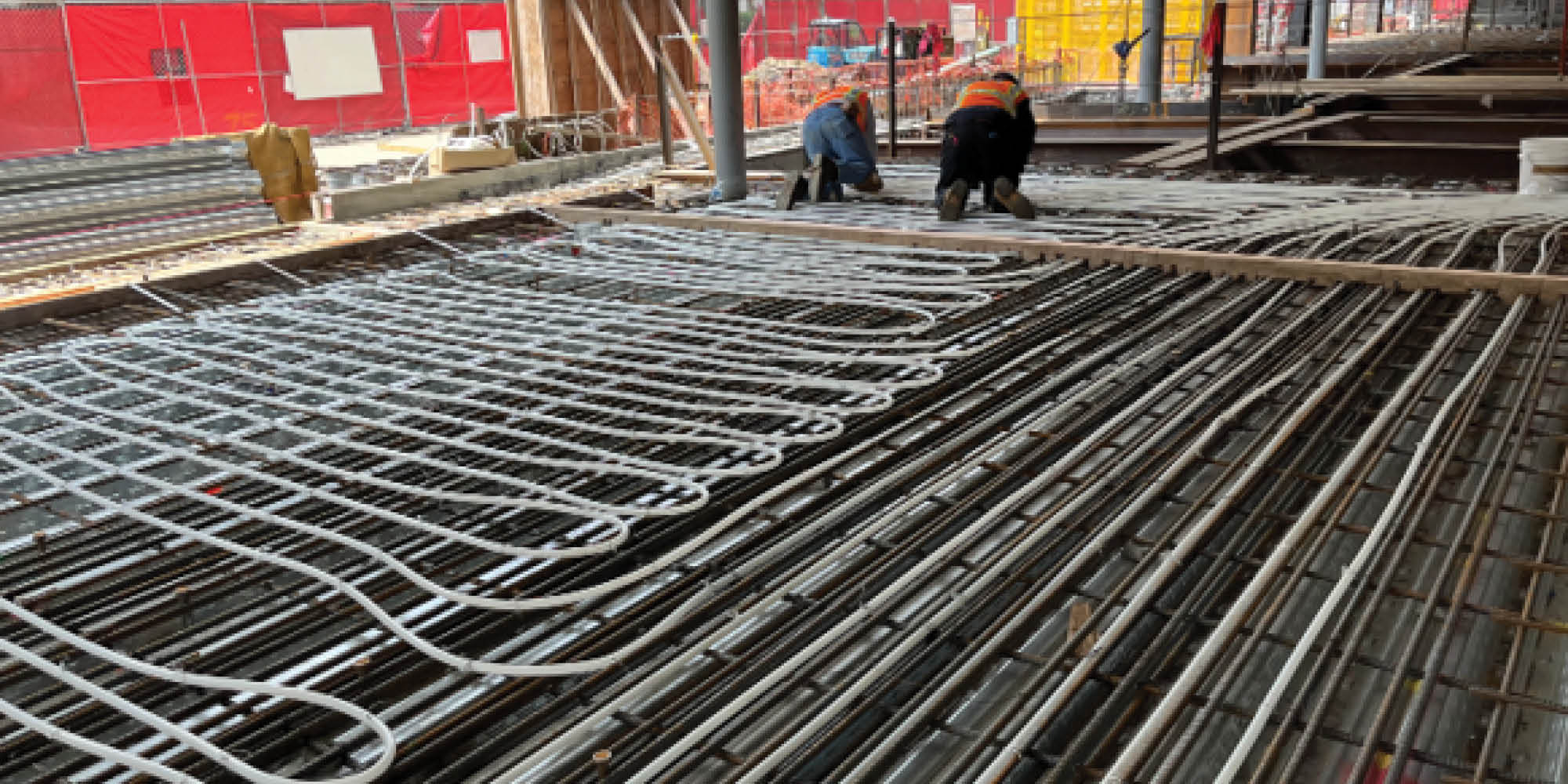
Left) Design details Radiant In-Slab Heating and Cooling; (Right) Construction image Radiant In-Slab Heating and Cooling
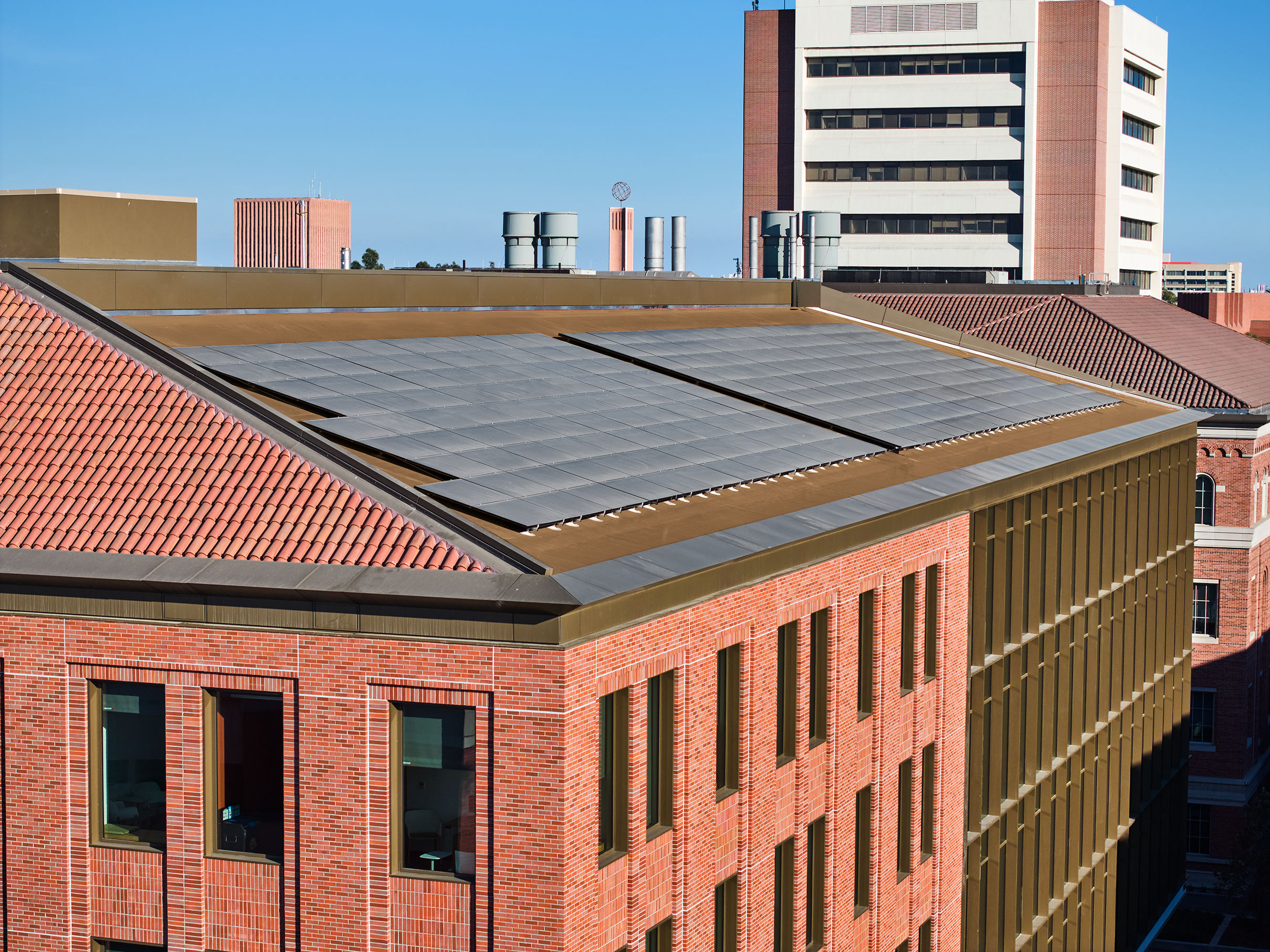
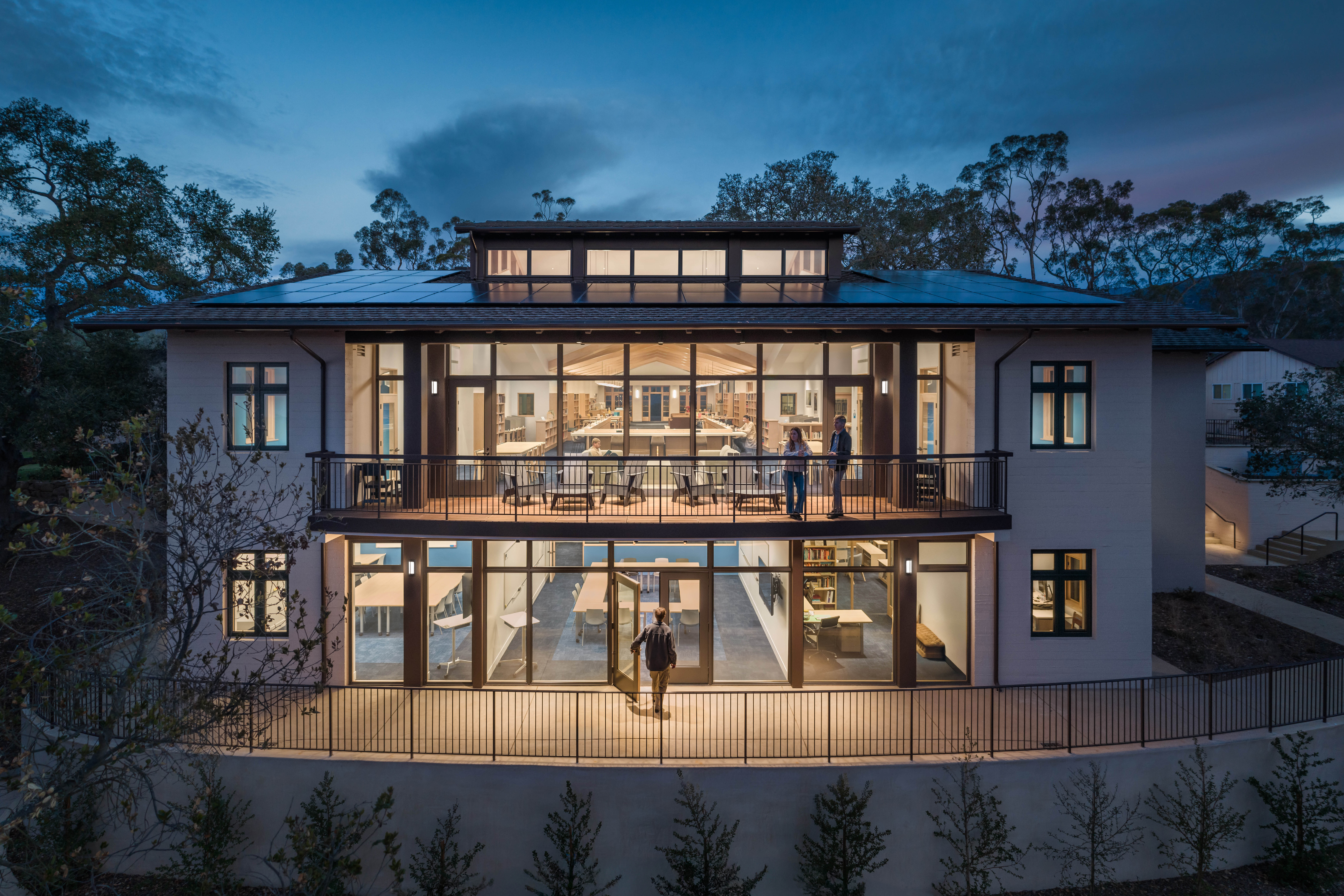
Photovoltaic Panels on the Roof of Ginsburg. © Alan Karchmer/OTTO
One creative element that achieved this was the building’s radiant in-slab heating and cooling, which was designed to work in conjunction with the air systems to circulate air more effectively. The combined radiant deck and dedicated outdoor air system required close coordination with the mechanical engineers to incorporate piping in the structural deck. The concrete for the structural deck was also mixed to include synthetic fiber to mitigate cracking.
Additionally, we specified sustainable materials for the structural system. Fly ash was utilized as direct replacement for cement in all concrete, helping recycle materials and reduce CO2 emissions.
An additional challenge was the interaction between steel elements and concrete basement walls. The structural system included steel columns from the superstructure that continued down into the basement to the foundation level. This required careful detailing and coordination to allow for proper tolerance and successful installation sequencing between two separate, yet interactive trades.
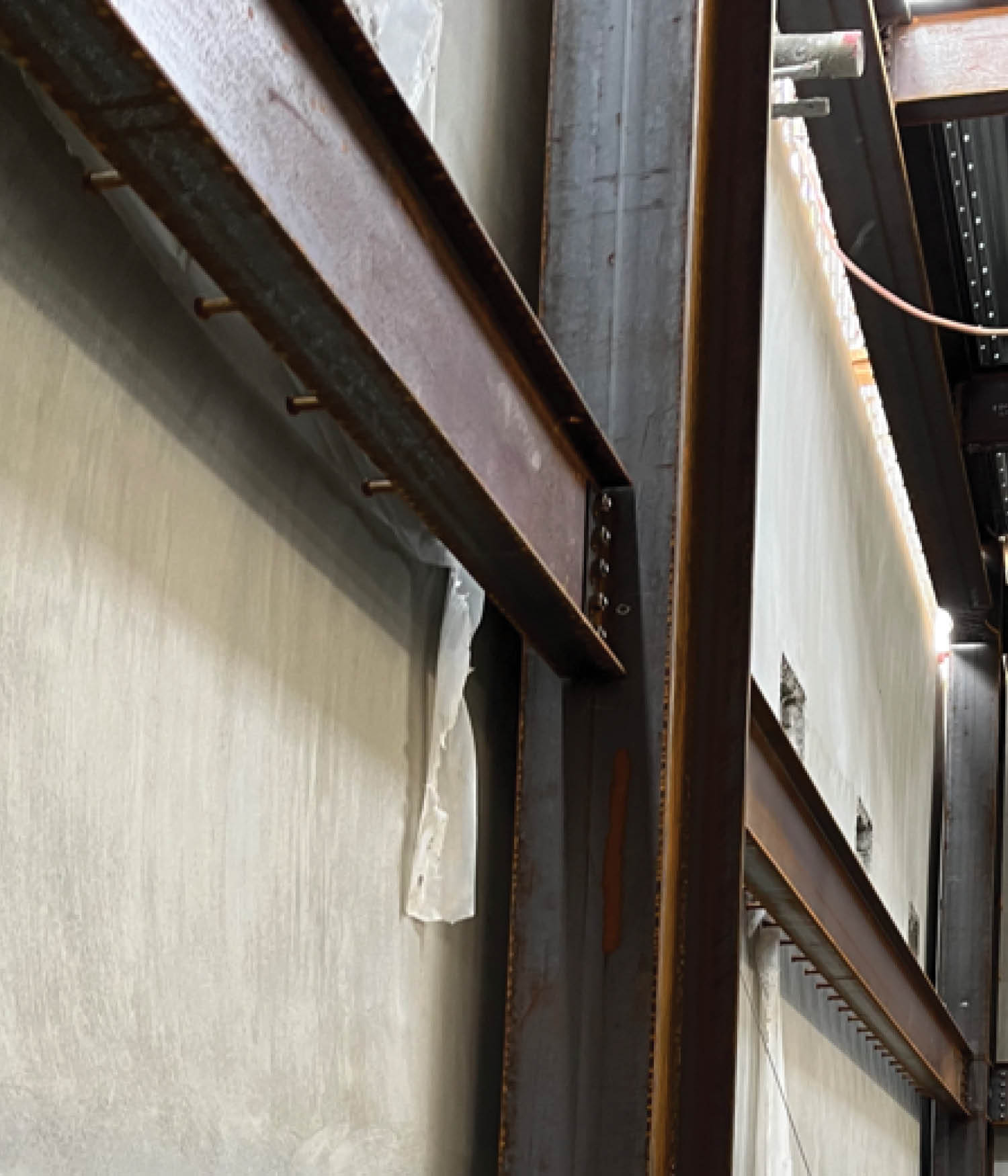
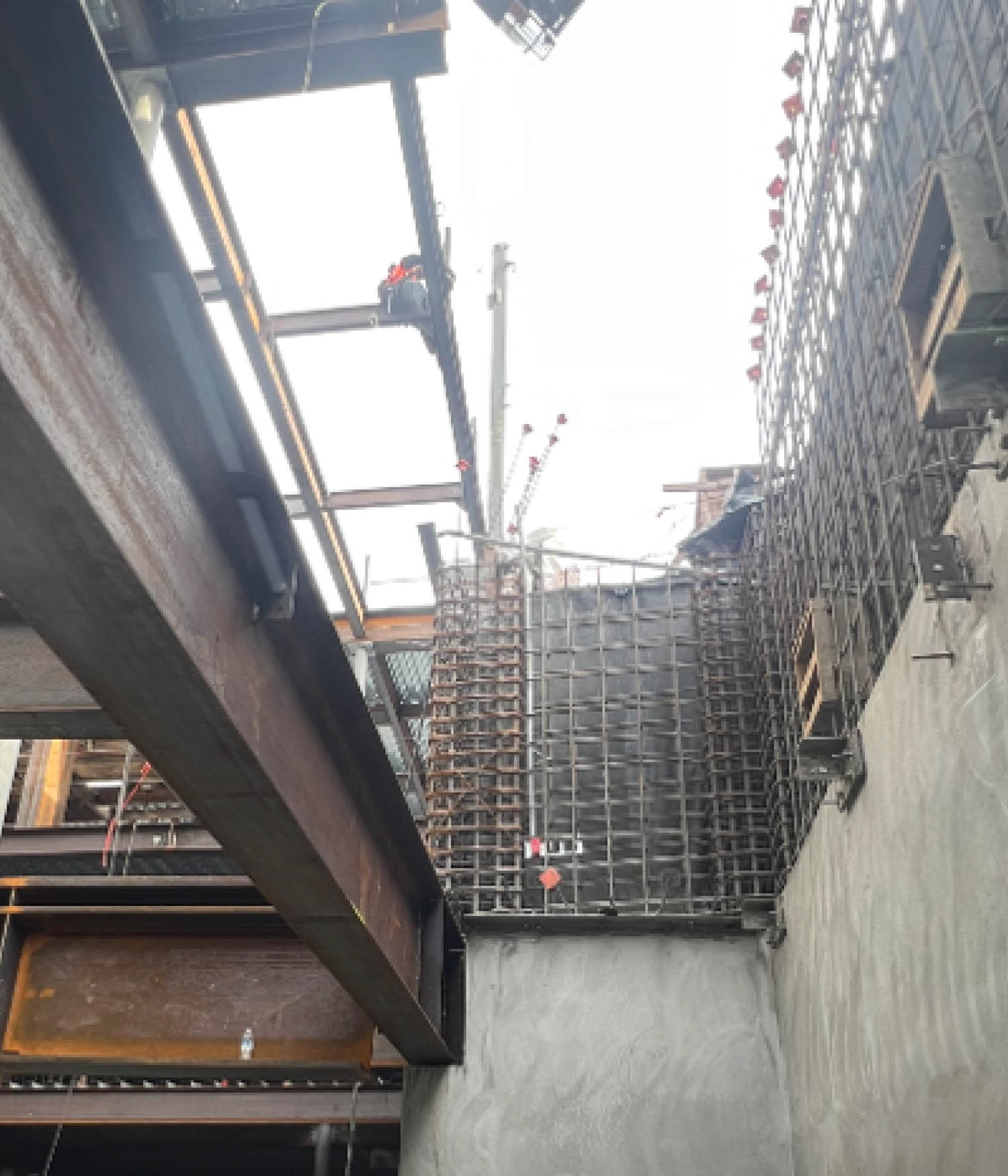
(Right) Construction shot of steel transfer beam with welded studs prior to concrete cast; (Left) Construction image of embed plates cast in place to receive steel beams at a later sequence
One way to address the interaction was to utilize steel collector beams to transfer seismic forces to basement walls, using embed plates with welded rebar. Additional beams were supported by pockets inside the basement walls.
Finally, we utilized natural moment frame fixity provided by the presence of the two levels of basement walls. By taking advantage of the backstay effect, we were able to provide a more efficient lateral system in terms of the member sizes, and the detailing and force transfer at the foundation interface.