Details
- Size: 22,700 square feet
- Completion Date: 2025
Team
- Architect: Westberg White Architecture
- Contractor: Icon West, Inc.
Awards
- Award of Merit for Historic Preservation, 2026 SEAOSC Excellence in Structural Engineering Award
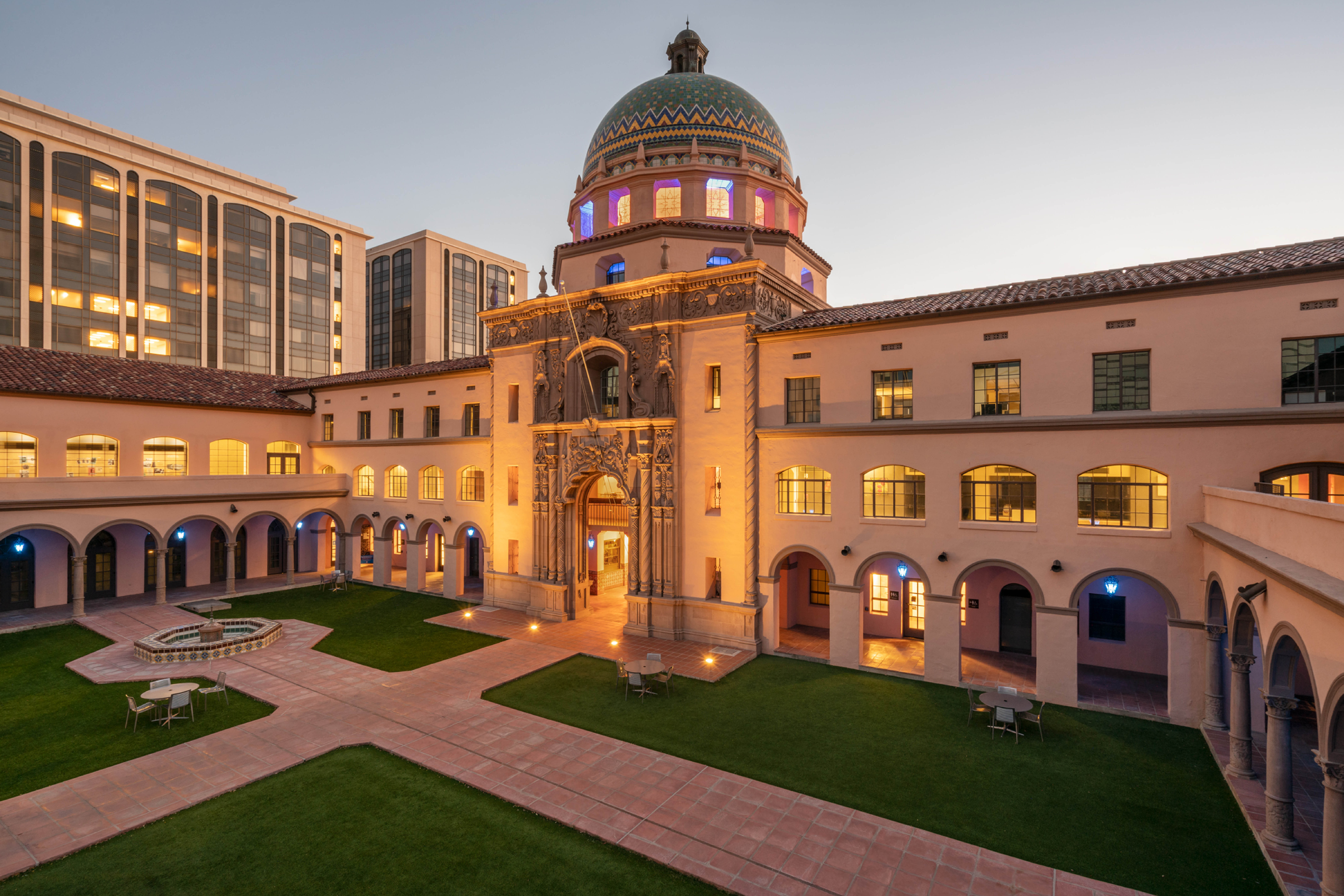
Building 300 at Fullerton College was originally designed and approved by the
State of California in 1935, shortly after the devastating Long Beach earthquake
of 1933 led to the establishment of the Division of the State Architect (DSA).
The 22,700 square foot structure is a two-story building constructed with cast-in-place (CIP) concrete floors, walls, and columns reinforced with mild steel
bars, and supported on cast-in-drilled-hole (CIDH) concrete piles. Its original
design incorporates a range of historic Art Deco features rarely seen in modern
construction and difficult to replicate, including double barrel-vaulted plaster
ceilings, a copper dome, copper gutters, clay roof tiles, wrought iron grilles and
ornaments, and cast stone and decorative concrete elements.
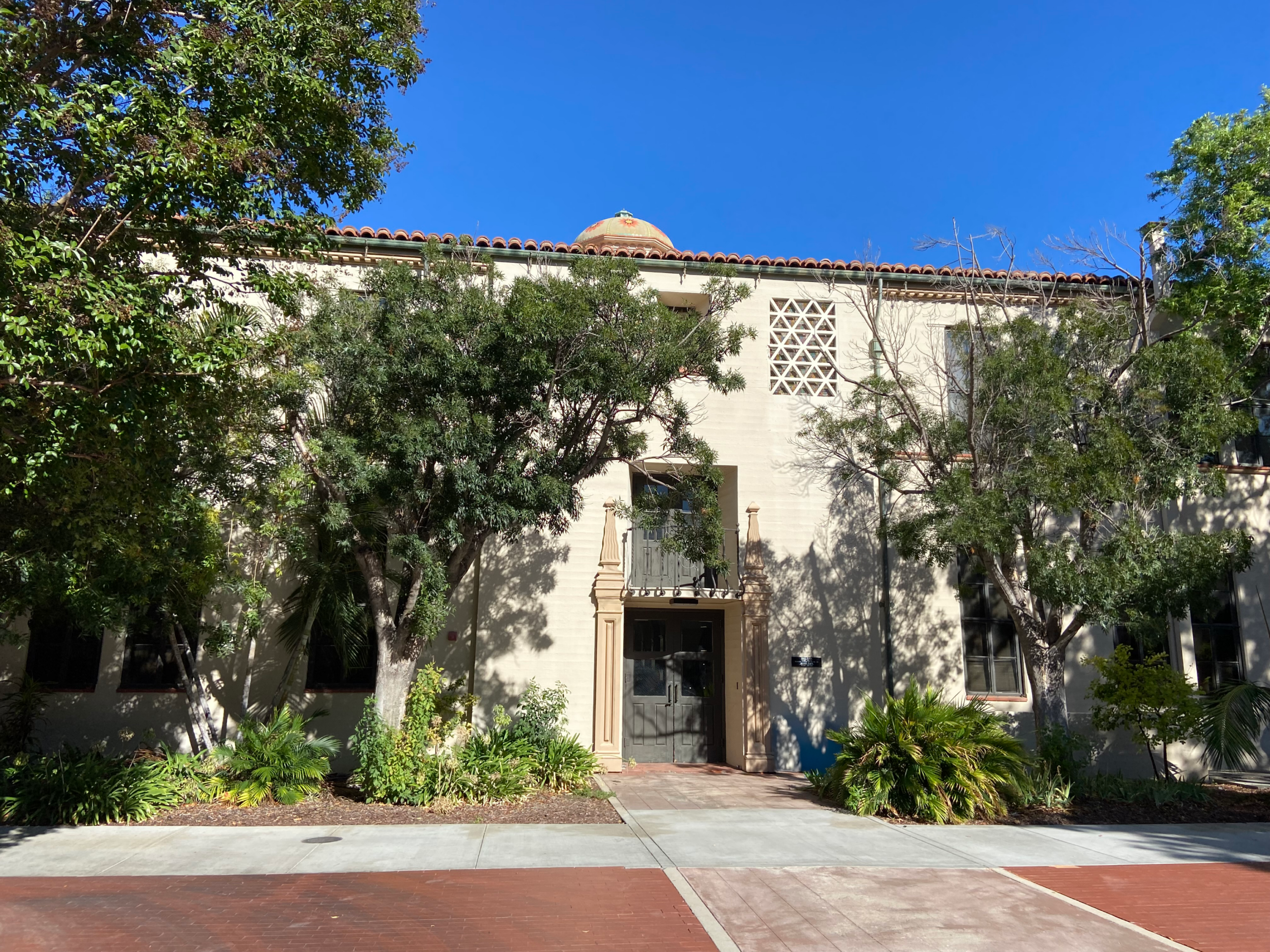
After nearly 90 years of service, the building required a major interior renovation. This effort triggered a mandatory seismic retrofit in accordance with the California Administrative Code, with the retrofit designed to comply with ASCE 41 standards. The structural evaluation revealed several critical deficiencies, including inadequate shear and chord/collector capacity in the concrete floor and roof diaphragms, overstressed concrete shear walls, and existing piles that were insufficient for current seismic demands. All required upgrades needed to be implemented while preserving the building’s historic architectural character.
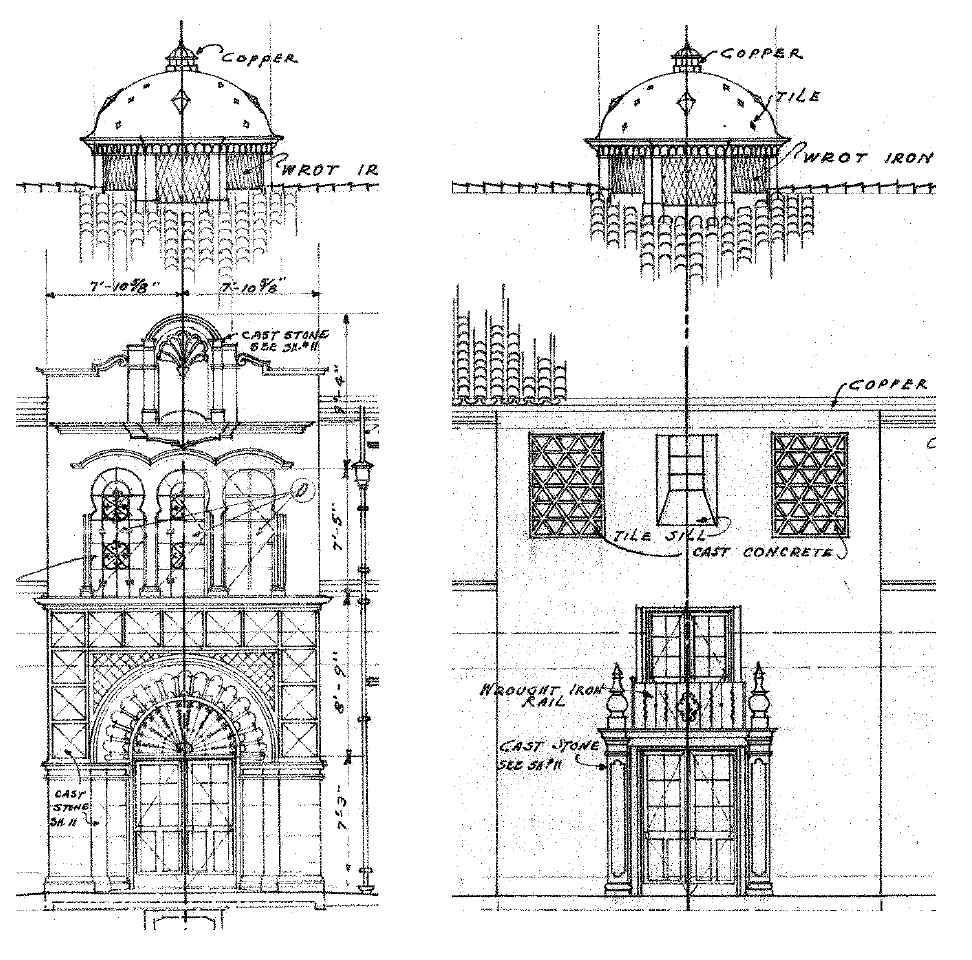
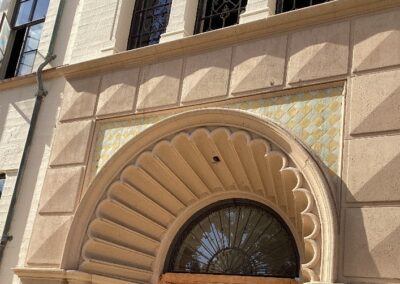
Historic Entry Elevations
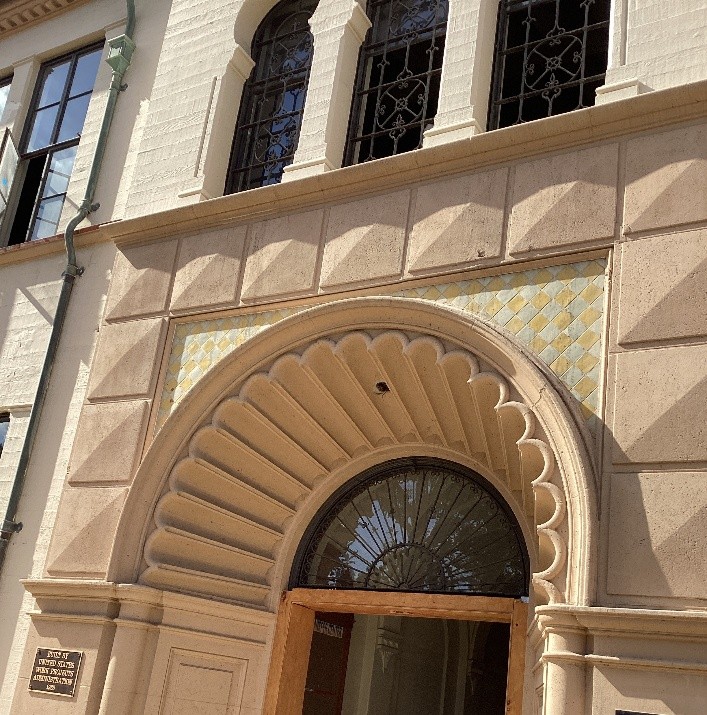
Historic Cast-in-Place Features
The project was defined by two primary engineering challenges: designing a deep foundation retrofit beneath the existing structure and strengthening overstressed concrete elements without compromising historic features. These challenges were compounded by an aggressive schedule, as the district required design and permitting to be completed within 12 months to secure state funding.
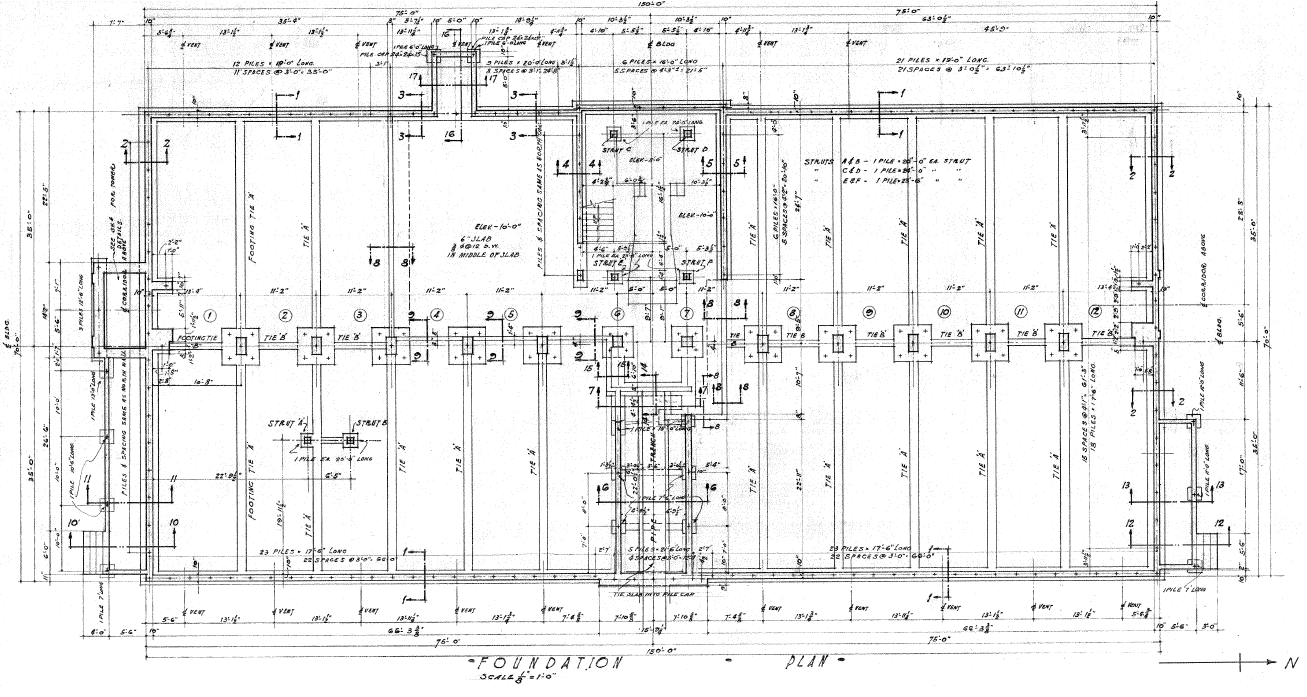
Foundation Framing Plan
The building itself is a 70-foot by 150-foot rectangular structure with 10-inch thick CIP concrete perimeter walls and two interior transverse walls that terminate at the second floor. The floors and roof are framed with lightweight concrete pan joists spaced at approximately 3 feet on center, supporting 3-inch lightweight concrete slabs that act as diaphragms. The structure includes a raised first floor with a 4-foot crawl space, a partial basement at the center, and continuous pile caps supported by 12-inch diameter piles spaced 3 to 4 feet apart and extending 16 to 20 feet deep.
Several structural deficiencies were identified. The diaphragms lacked sufficient shear capacity due to their thin slabs and minimal reinforcement, while collector elements at interior walls were inadequate. Roof diaphragm stresses were elevated because of discontinuities in the vertical load-resisting system. Window openings further reduced shear wall capacity, overstressing lintels and piers in both shear and flexure. Additionally, historic finishes limited viable strengthening locations, and the existing pile system was inadequate for modern seismic lateral loads.
Early retrofit concepts considered adding concrete or using fiber-reinforced polymer (FRP) systems. Although both approaches were viable, adding concrete would have increased seismic mass and triggered further foundation upgrades. As a result, FRP was selected as the primary strengthening method.
FRP was applied to the floor diaphragms to increase shear, chord, and collector capacity, while at the roof it was installed on the underside to preserve the historic clay tiles. Because the pan joists interrupted diaphragm continuity, FRP fan anchors were used to transfer forces across the joists. FRP anchors were also used to transfer diaphragm forces into shear walls. FRP strengthening was applied to the interior faces of exterior concrete shear walls to increase both shear and flexural capacity while preserving the building’s exterior appearance.
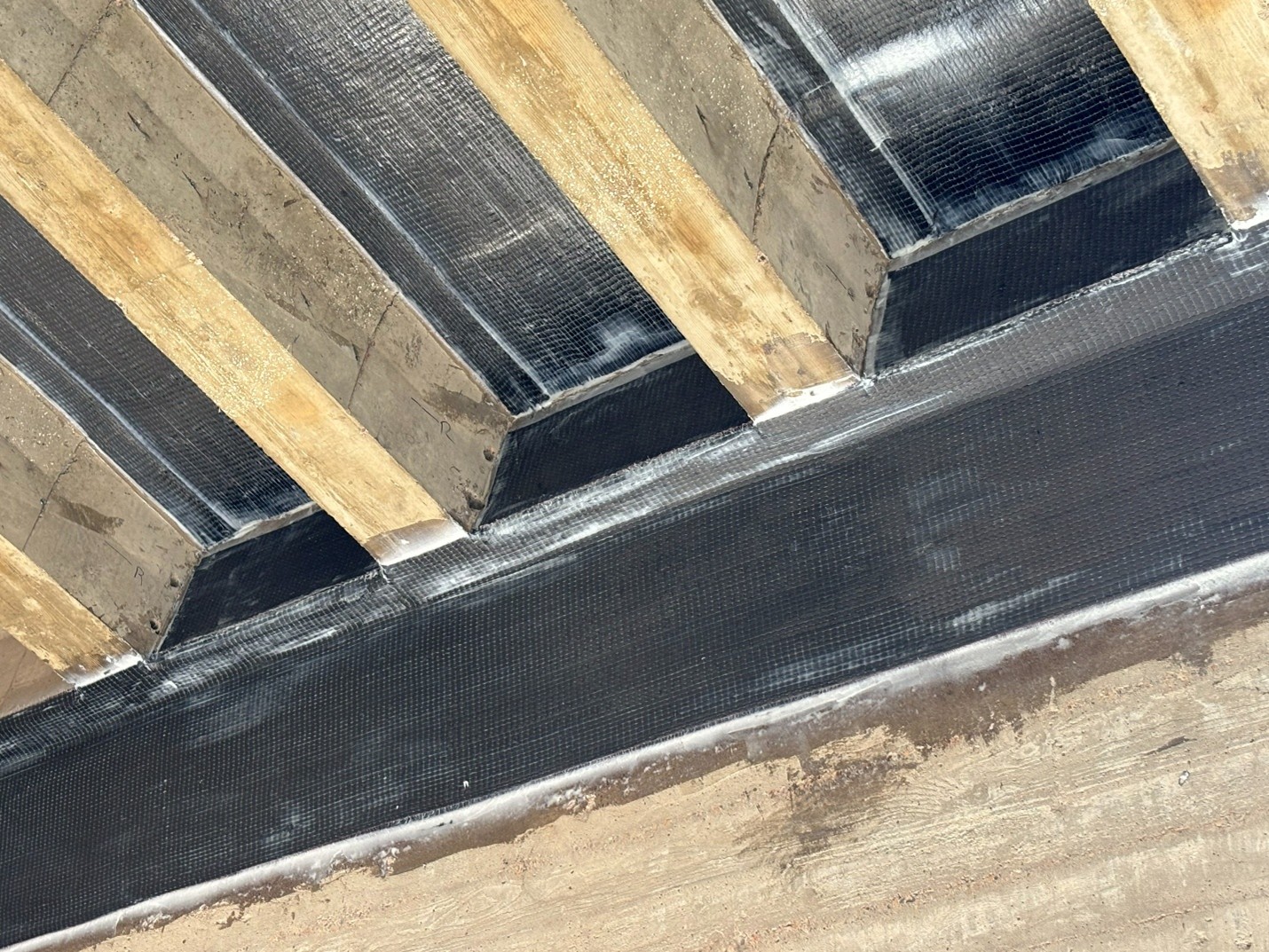
FRP Installation Between Roof Pan Joists
In areas where roof diaphragm demands exceeded the capacity of FRP alone, new transverse concrete walls were introduced above existing walls to reduce diaphragm spans. These elements were carefully detailed to avoid impacting the historic double barrel-vaulted plaster ceilings.
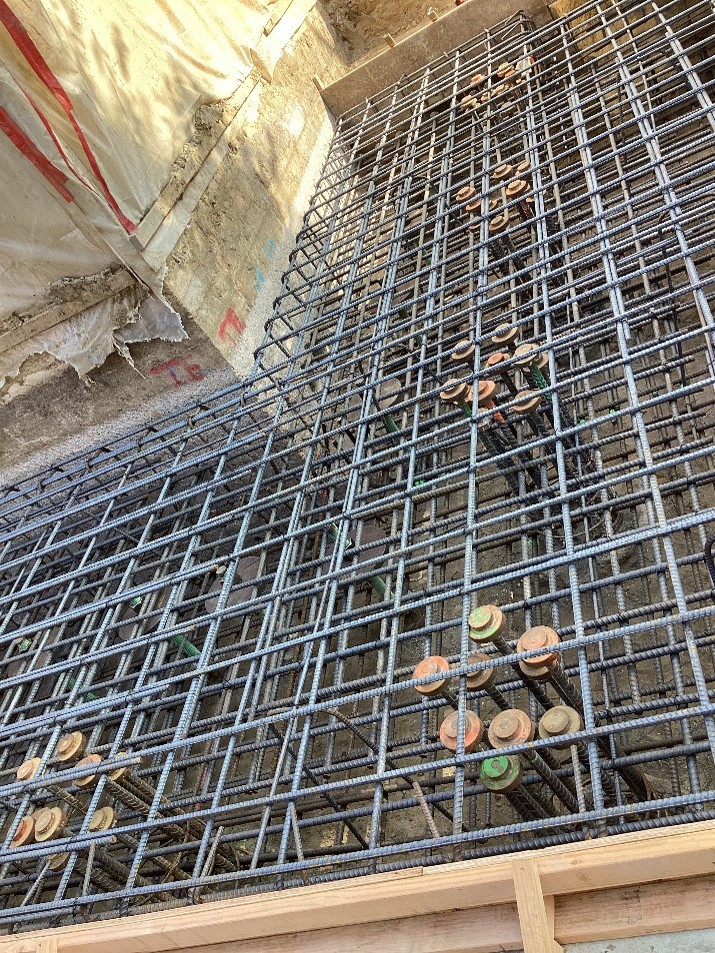
CIDH Piles Installed Outside of the Building
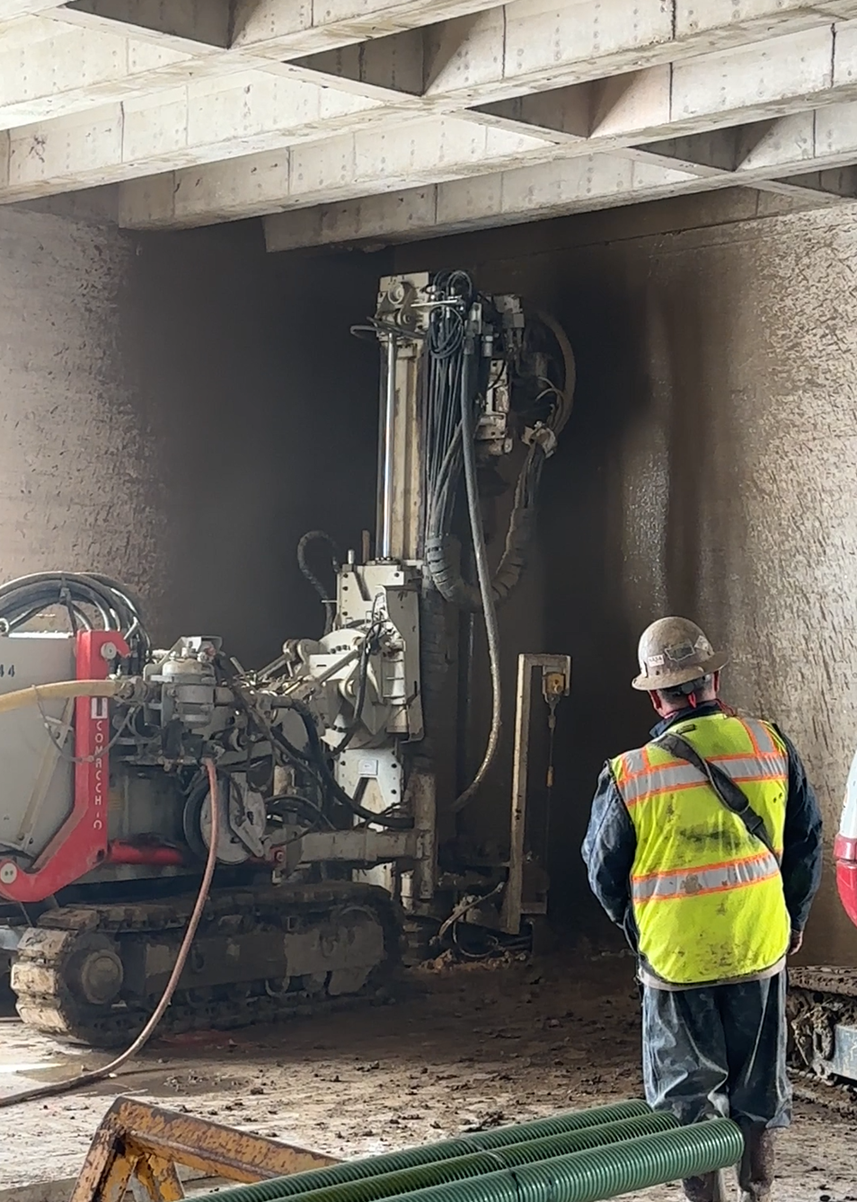
The foundation retrofit required an approach that minimized disruption to the historic structure while achieving modern seismic performance. Micropiles were installed beneath the building using low-clearance equipment brought through existing entrances, with selective removal of first-floor slab areas to allow access through the crawl space and basement. Outside the basement footprint, micropile locations were carefully coordinated with first-floor framing so they could be drilled from above.
Micropiles proved highly effective in resisting axial loads, including both tension and compression resulting from seismic overturning. However, because they provide limited shear resistance, new CIDH piles were installed outside the building footprint to resist lateral seismic forces. Large pile caps were then constructed to connect new and existing piles, ensuring effective load transfer across the upgraded foundation system.
Meeting the aggressive 12-month schedule required early and continuous coordination with DSA. The project team conducted multiple pre-application meetings, aligned early on the overall design approach, and maintained clear communication regarding schedule constraints. To further expedite the review process, DSA assigned two plan reviewers to evaluate separate portions of the project concurrently.
This collaborative and proactive approach enabled timely permitting and ensured the project remained eligible for critical state funding.
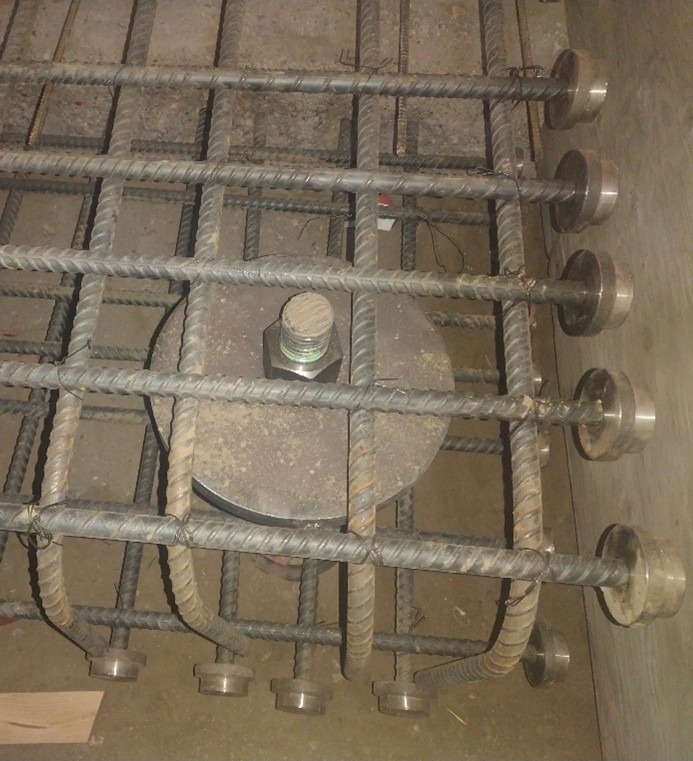
Micro Pile Installed in Basement
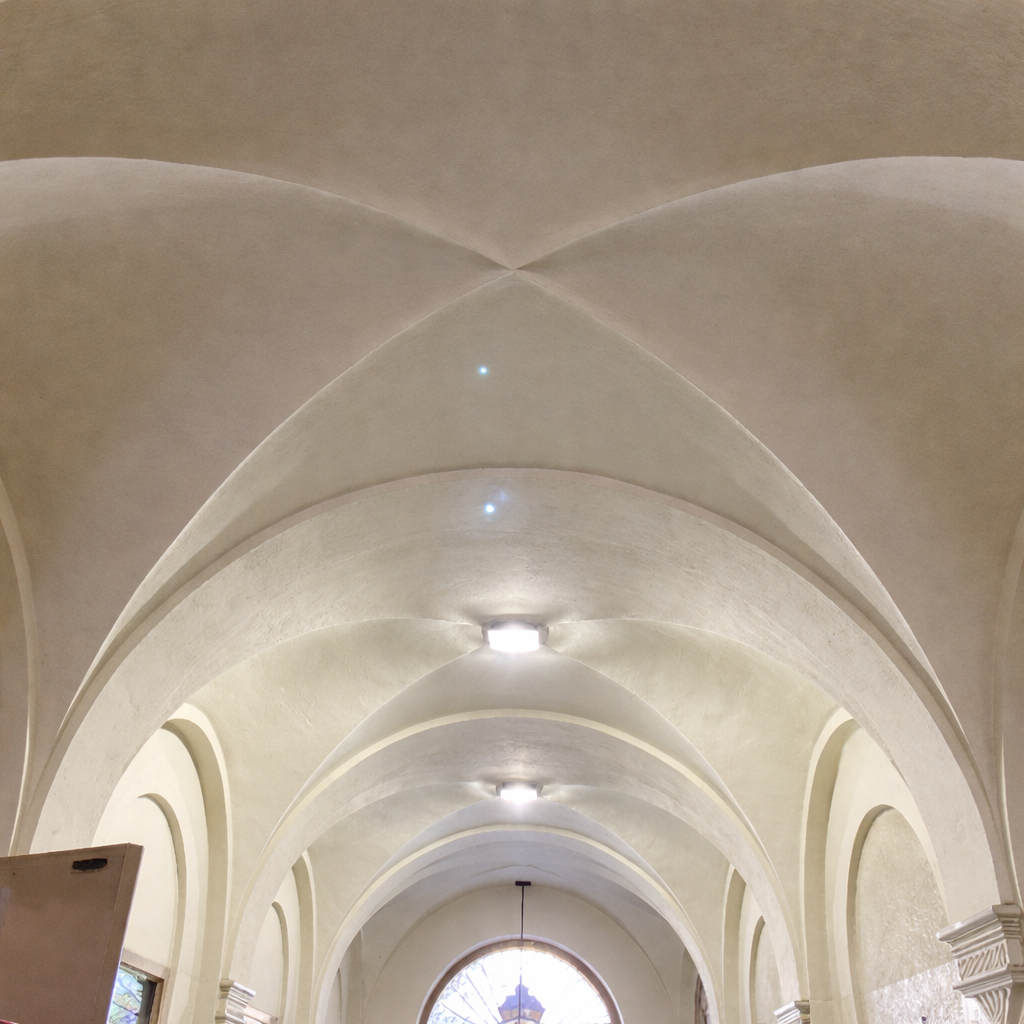
Historic Ceilings
This project exemplifies engineering excellence by solving complex structural deficiencies with innovative and efficient solutions while preserving historically significant architecture. It integrates structural systems into a cohesive, performance-driven design and demonstrates a high level of constructability and practicality under demanding constraints.
A key aspect of this excellence lies in creative structural problem-solving. Rather than relying on conventional strengthening methods that would have increased seismic mass, the design team leveraged FRP to enhance strength without adding weight. Innovative detailing, such as underside FRP installation at the roof and interior-side application at walls, preserved historic finishes, while fan anchors addressed force transfer challenges created by pan joist framing.
Equally important was the seamless integration of preservation and performance. Historical features such as the barrel-vaulted ceilings and copper dome were left undisturbed, and strengthening measures were strategically located to minimize visual and architectural impact. New structural elements, including added shear walls, were introduced in ways that reduced diaphragm demand without altering significant historic spaces.
The foundation retrofit further highlights the project’s ingenuity. Installing deep foundations beneath an existing historic structure is inherently complex, yet the combined use of micropiles for axial capacity and CIDH piles for lateral resistance provided a hybrid solution that was both effective and constructible.
Constructability was a central consideration throughout the project. FRP minimized demolition and material handling, equipment access was planned through existing openings, and large construction activities were kept outside the building whenever possible to protect the historic façade. Selective and phased slab removals further reduced disruption during construction.
Micro Pile Drilling Rig on First Floor