Details
- Size: 24,000 square feet
- Completion Date: 2024
- Sustainability: LEED Silver
Team
- Architect: Blackbird Architects, Inc.
- Contractor: Hartigan Foley
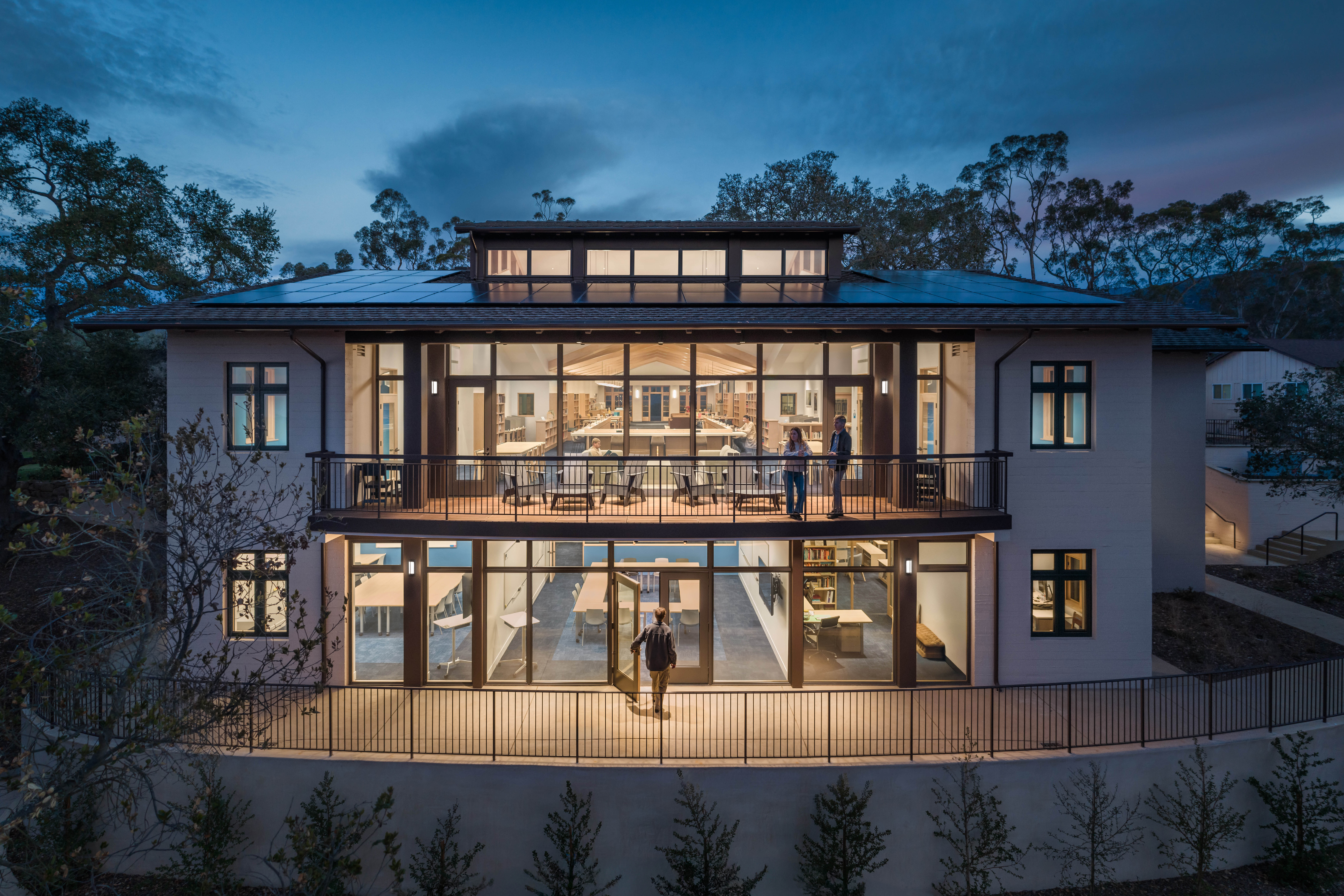
The Cate School Modernization project included the repurposing of an existing 8,000 square foot single-story concrete building with wood truss roof from the 1920’s. The project also included an attached 16,000 square foot two-story building expansion featuring media and technology studios, classrooms, ceramics studio, study pods, offices, a double-height terraced reading/lecture space, and the school’s library collection. Refreshed patio and garden spaces for study and gathering expand upon campus-wide amenities for learning outdoors.
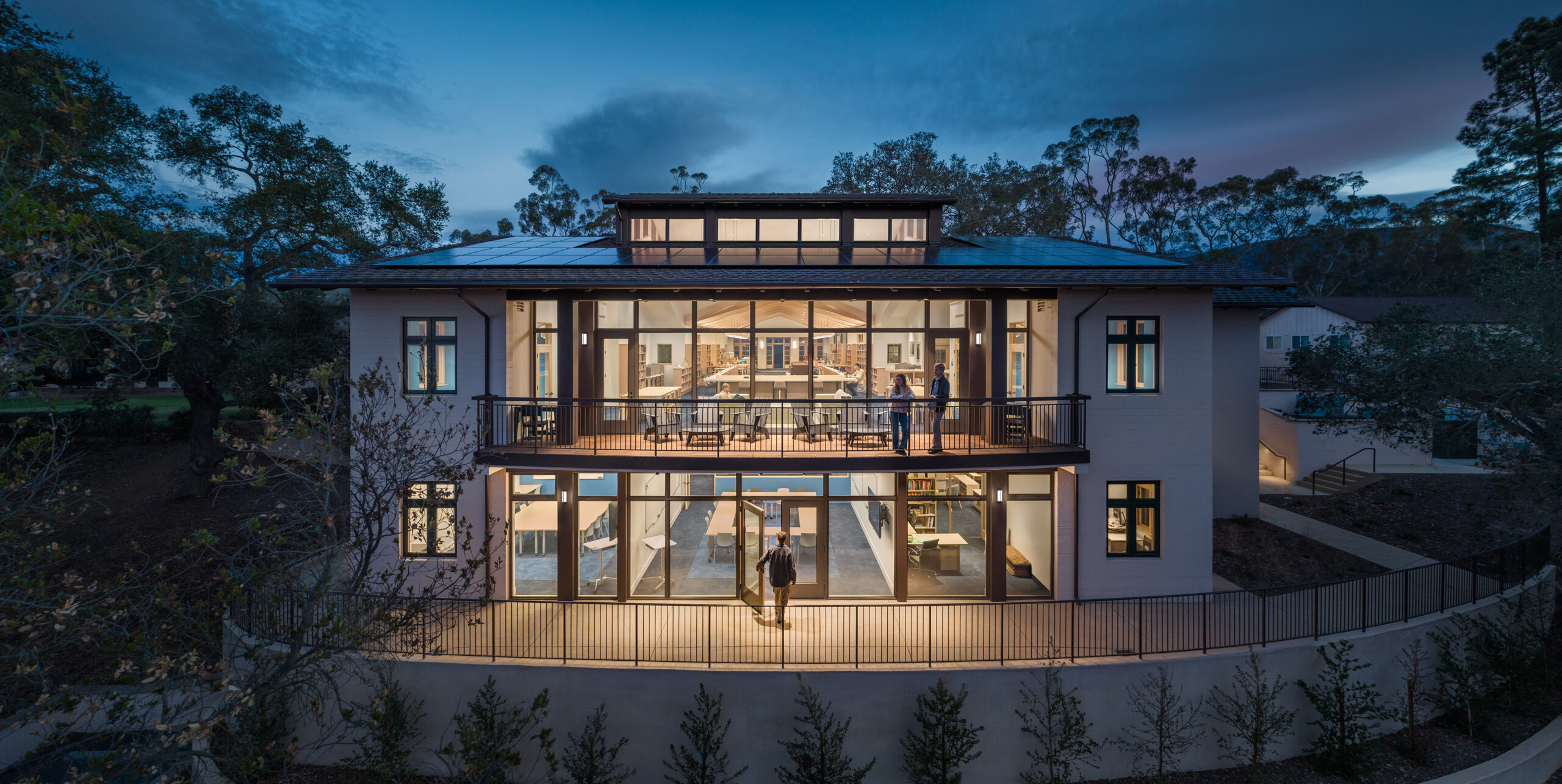
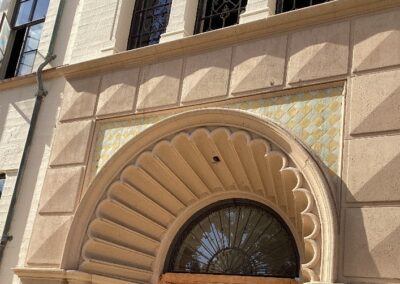
The single-story repurposed building included an ASCE-41 evaluation and strengthening with new concrete shear walls, roof elements and foundations. The new expansion features new concrete shear walls, 2nd floor composite deck, wood framed roof and spread footings. The project converts the former cafeteria into a state-of-the-art library and learning center. The design thoughtfully restores the building’s key historic spaces, while introducing bright learning environments that showcase sweeping ocean views.
John A. Martin & Associates, Inc. worked closely with Blackbird Architects to develop a design that reflects the historic nature of the campus. The firm also worked closely with Hartigan / Foley General Building Contractors during construction to solve design issues that arose as a result of unknown existing conditions and site constraints. The project required investigative field work and creative redesign during construction to address unforeseen conditions in crawlspaces, roof framing, and foundations.
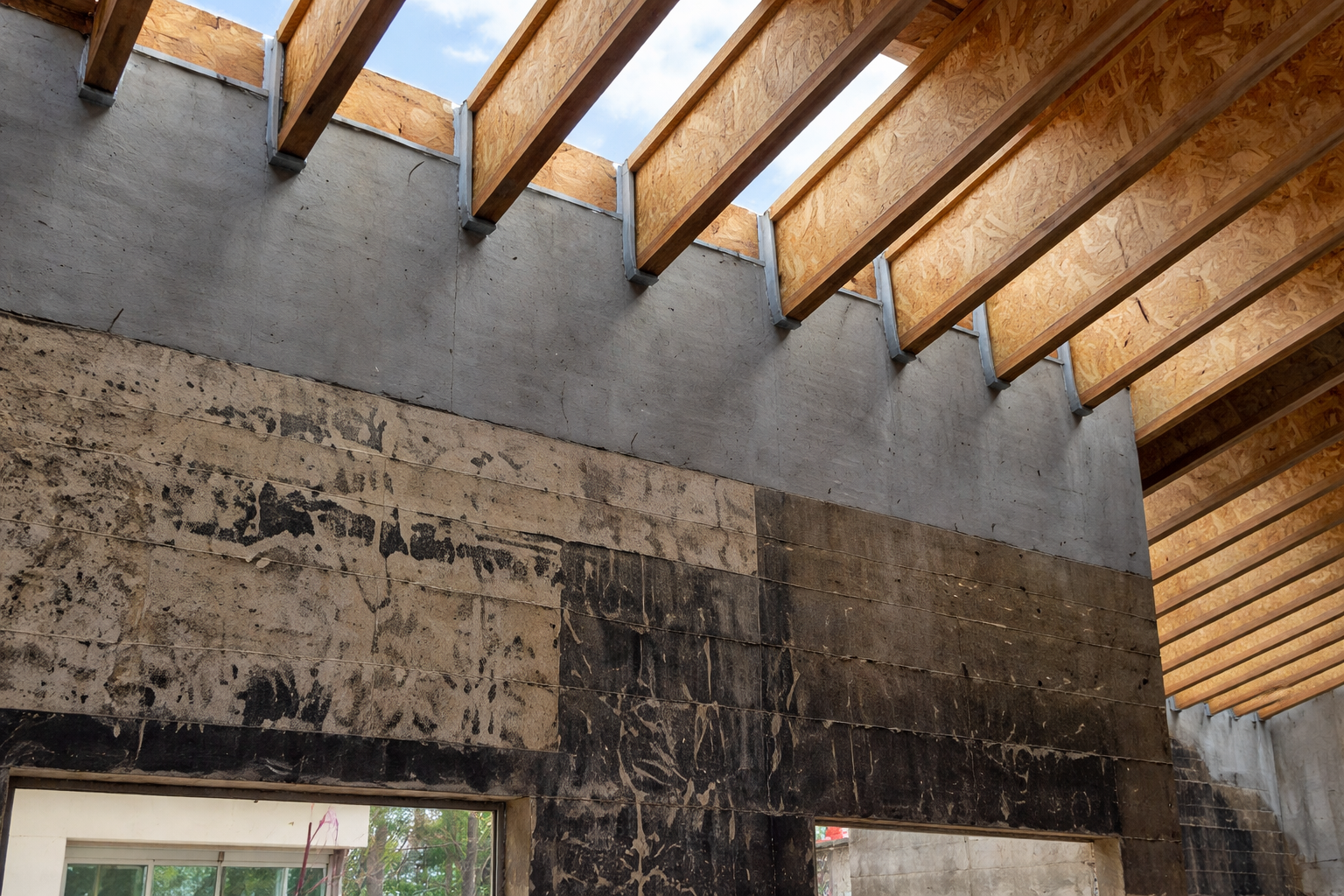
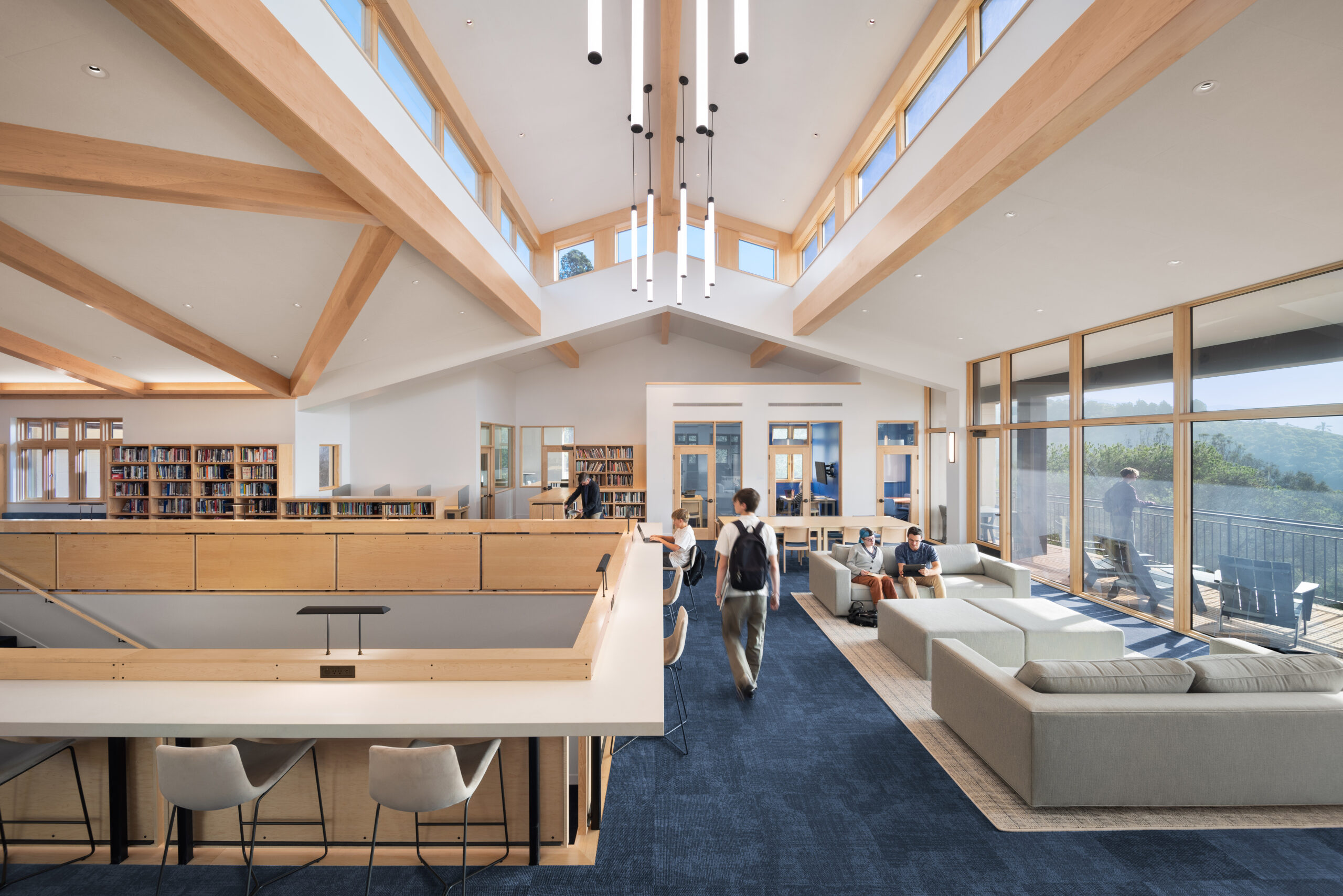
(Left) Construction image of wall height extensions with new roof framing over existing concrete walls; (Right) Completed Image showing new roof framing
One of the primary challenges was bringing the architectural vision to life within the constraints of a 1920s structure without complete original drawings. The team performed an ASCE 41 evaluation and navigated unknown existing conditions while preserving and revitalizing significant historic areas.
The retrofit required reconfiguring the roof connections to preserve the architect’s intended eave profile while enhancing the diaphragm performance and extending the height of existing walls.
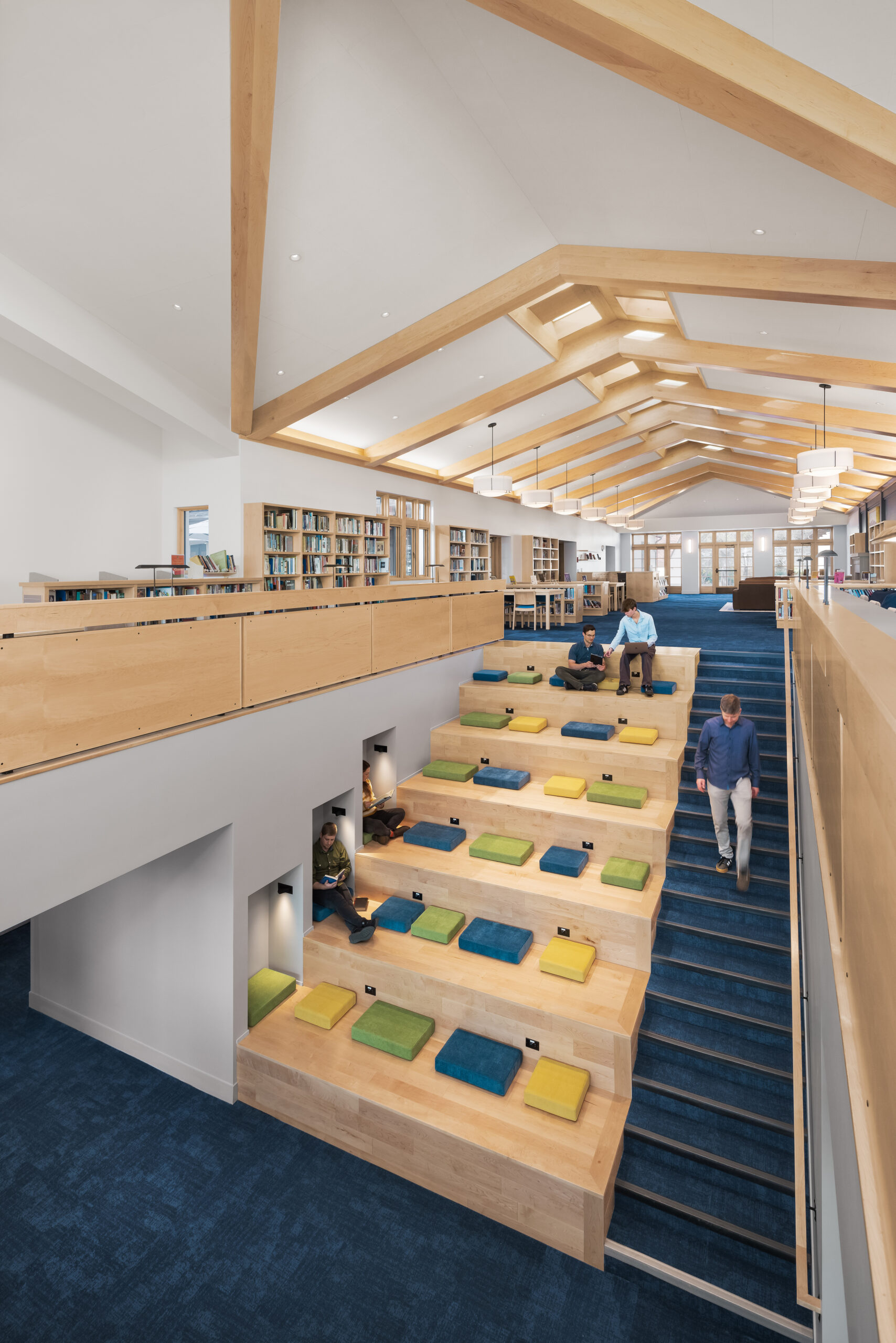
Bent HSS girders were introduced to create an open library space with vaulted ceilings and new clerestory windows, allowing daylight to suffuse the space. With limited ceiling space and prominent exposed architectural elements, the team had to think creatively about how to work within the constraints of the existing building while achieving the desired architectural expression using shallow beam depths and concealed connections.
The two-story hillside expansion introduced complex site constraints, including multiple retaining walls, grade beams, and tight foundation interfaces with the existing structure. During construction, John A. Martin & Associates, Inc. worked closely with the contractor to ensure project constructability and execution. This involved establishing a continuous and reliable seismic load path, especially through small, irregular existing elements, in addition to creative detailing and selective wall height increases that were not typical.
Structural systems were selected to align with the existing building fabric and to retain the historic walls as active components of the design. The use of concrete and masonry shear walls established a straightforward and effective lateral-force-resisting system for both the retrofit and the expansion, integrating seamlessly with the existing concrete walls. Wood roof framing and diaphragms were preserved to facilitate efficient load distribution, while steel floor framing was utilized for the new second-floor and crawl-space areas to support accelerated construction sequencing. Successful integration of steel, wood, concrete, and masonry required meticulous detailing between the different materials and coordination among all disciplines and trades.
To accelerate the construction schedule, CMU retaining walls were used to support the hillside soils. In constrained areas, these walls were designed on grade beams that span between deep pile foundations, some reaching depths of approximately 30 feet.
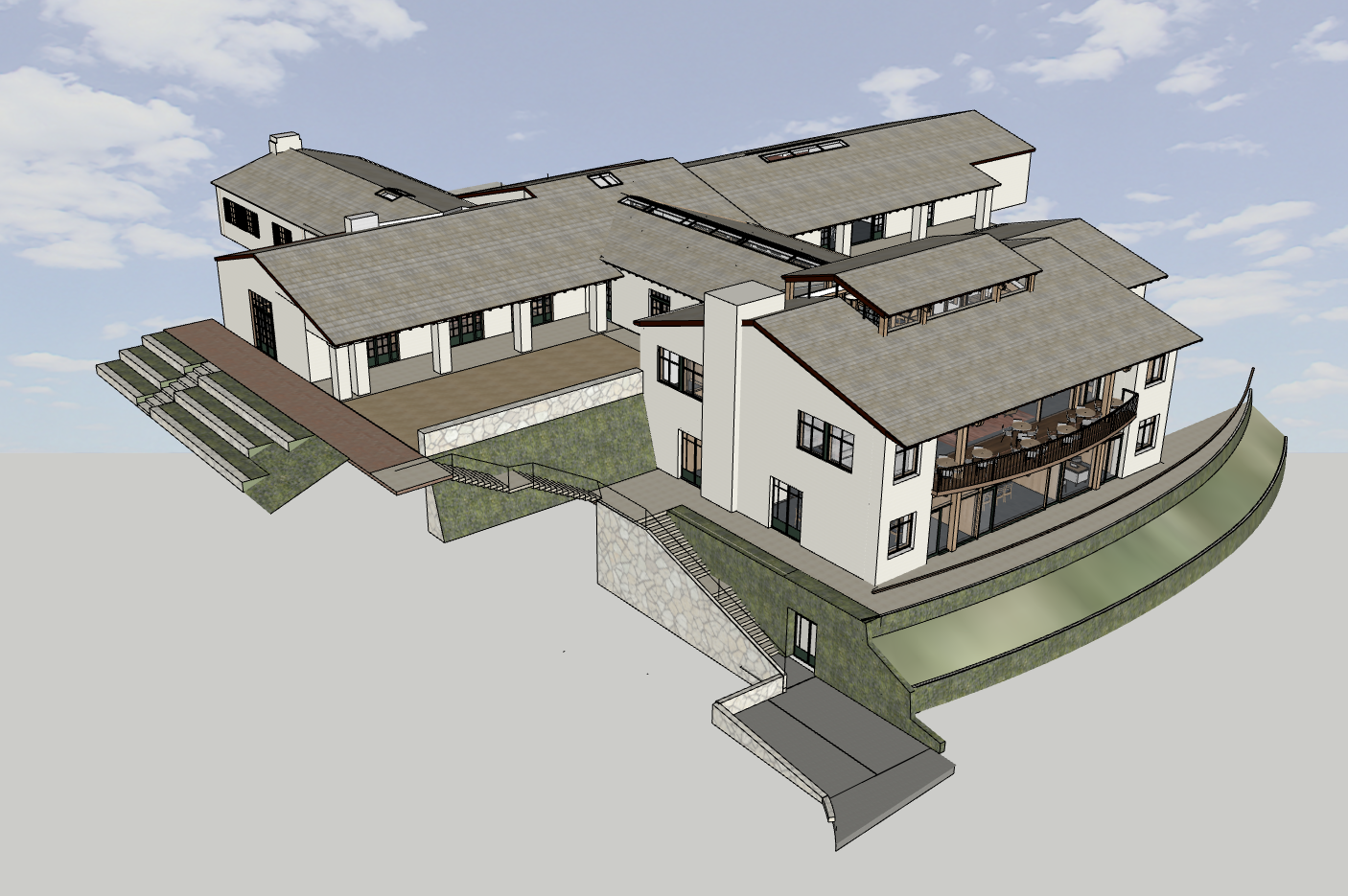
Model showcasing the project design and project site hillside
The project also required investigative field work and creative redesign during construction to address unforeseen conditions in crawlspaces, historic spaces, and foundations.
A 3,000‑square‑foot bifacial solar trellis enhances sustainability efforts and offers a shaded, communal outdoor area for students to congregate and enjoy.
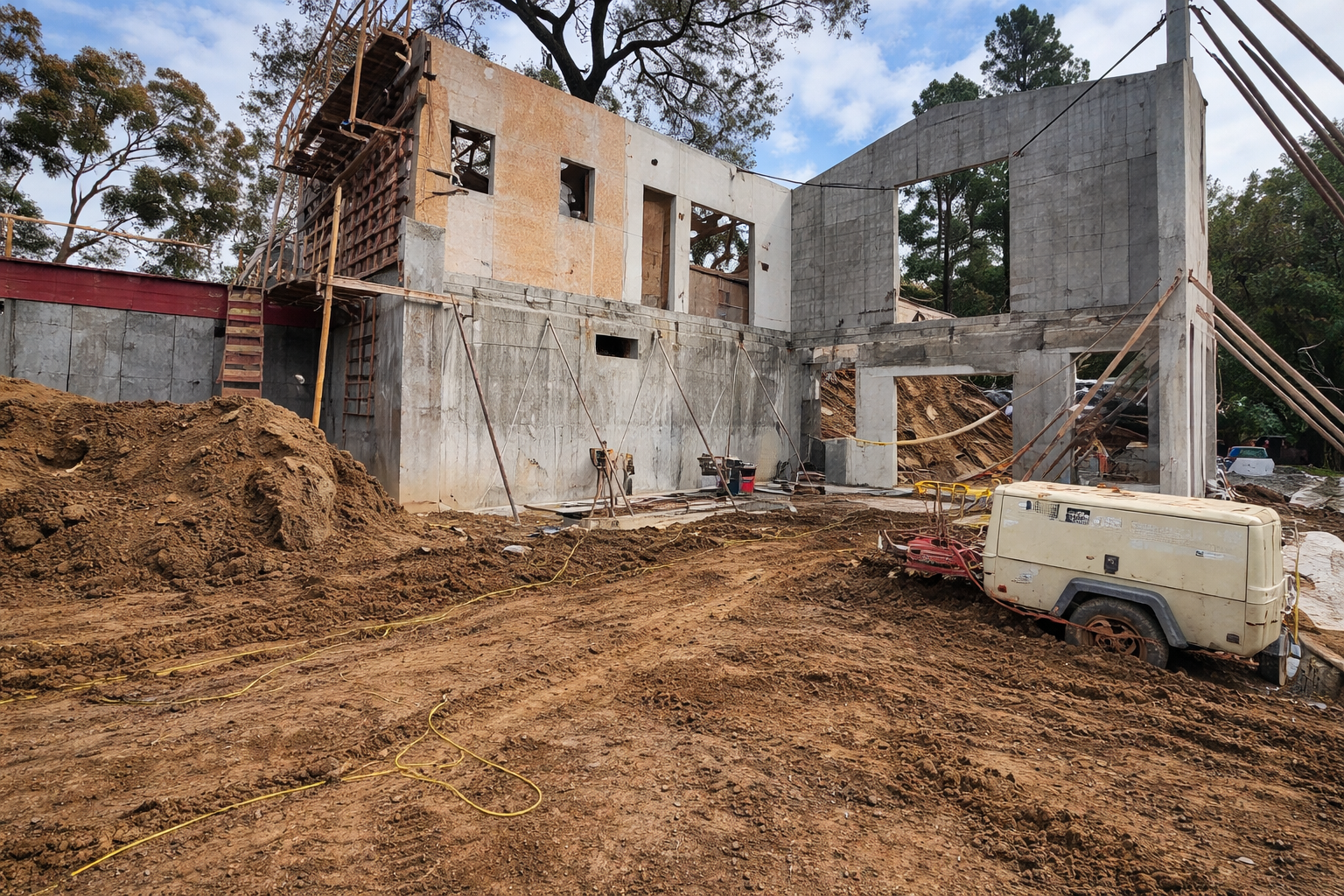
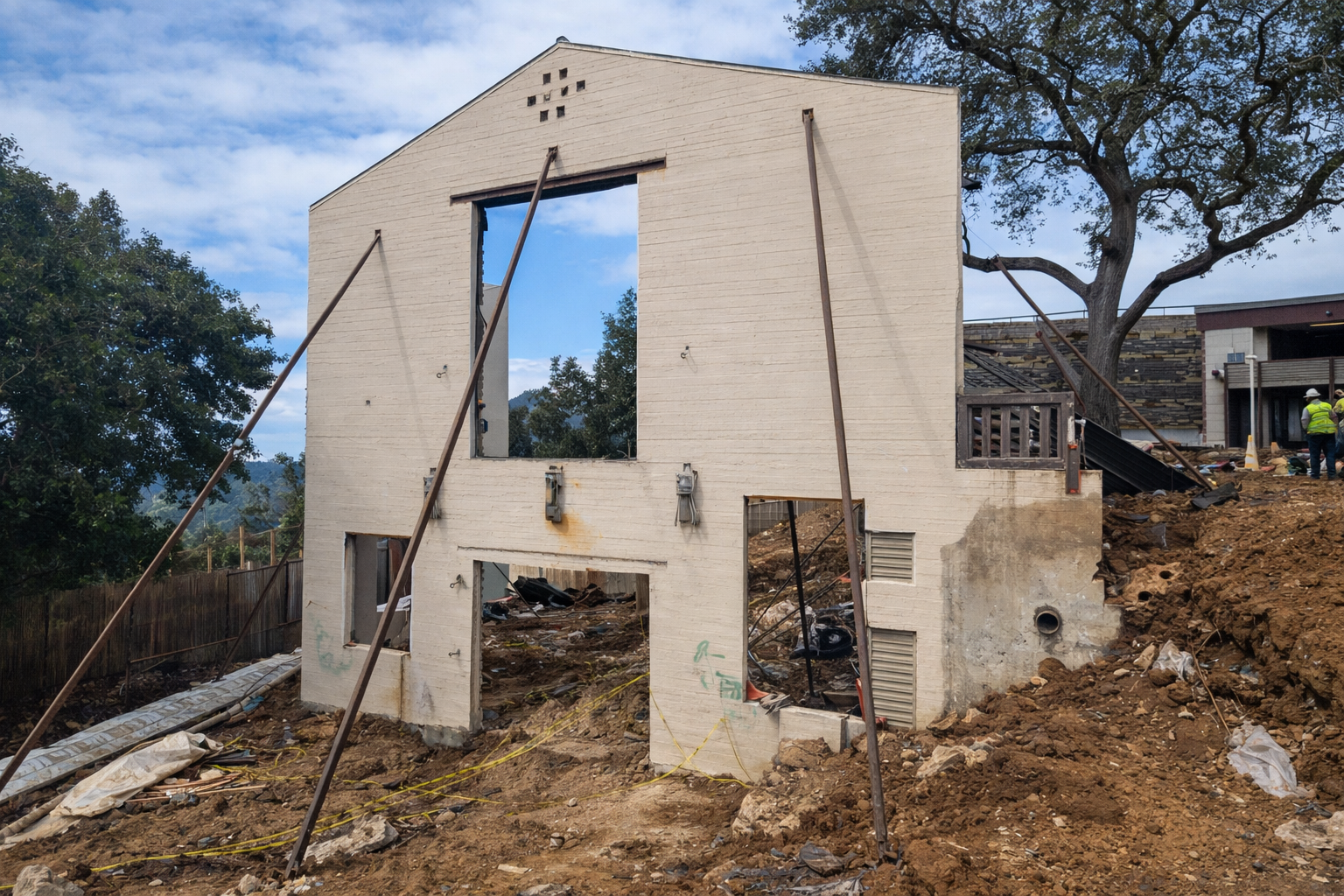
Construction images of temporary shoring the existing concrete walls after demolition and prior to building new floors to connect to
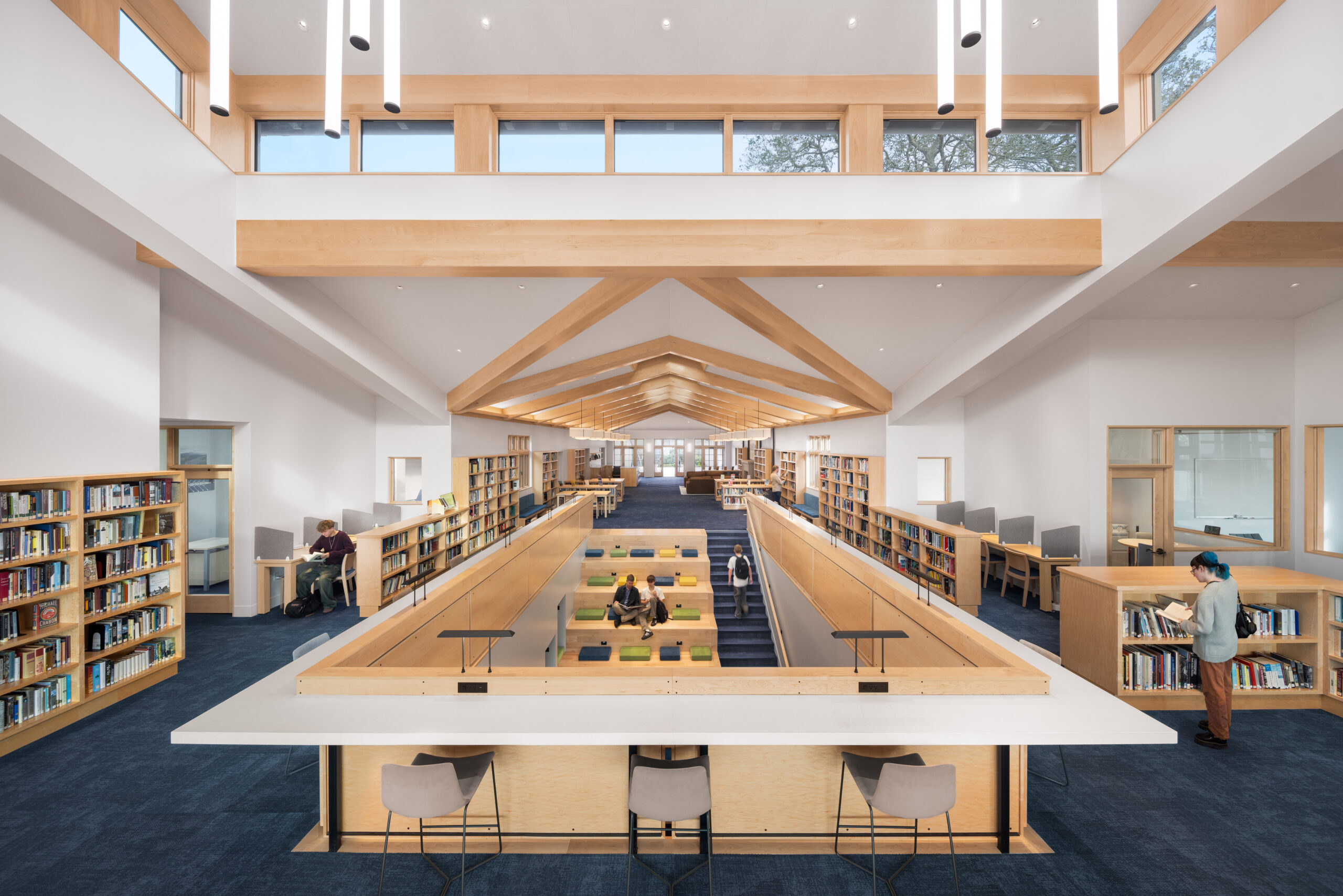
Photo credit: Alex Nye